

What is the menopause diet?
There’s no single menopause diet, but there are certain foods that can help support your body through hormonal change. A simple place to start is focusing on protein, healthy fats, fibre and phytoestrogen foods at most meals.
You might hear us referring to PPFF, which stands for Phytoestrogens, Protein, (healthy) Fat and Fibre. Together, these four pillars form the foundation of many of our recipes and meal ideas.
Combined with a Mediterranean-style, plant-dominant approach to eating, these foods may help support everything from energy and weight management to gut, heart and bone health during menopause.¹˒²
In fact, most of our recipes follow PPFF principles and are designed specifically for women in pre-, peri- and post-menopause.
They’re also anti-inflammatory, Mediterranean-inspired and gut-friendly, which becomes increasingly important as we move through perimenopause and beyond.
Watch: How Gut Health Impacts Your Meno Journey
You might like: 5 Ways Your Diet Should Change Entering Perimenopause
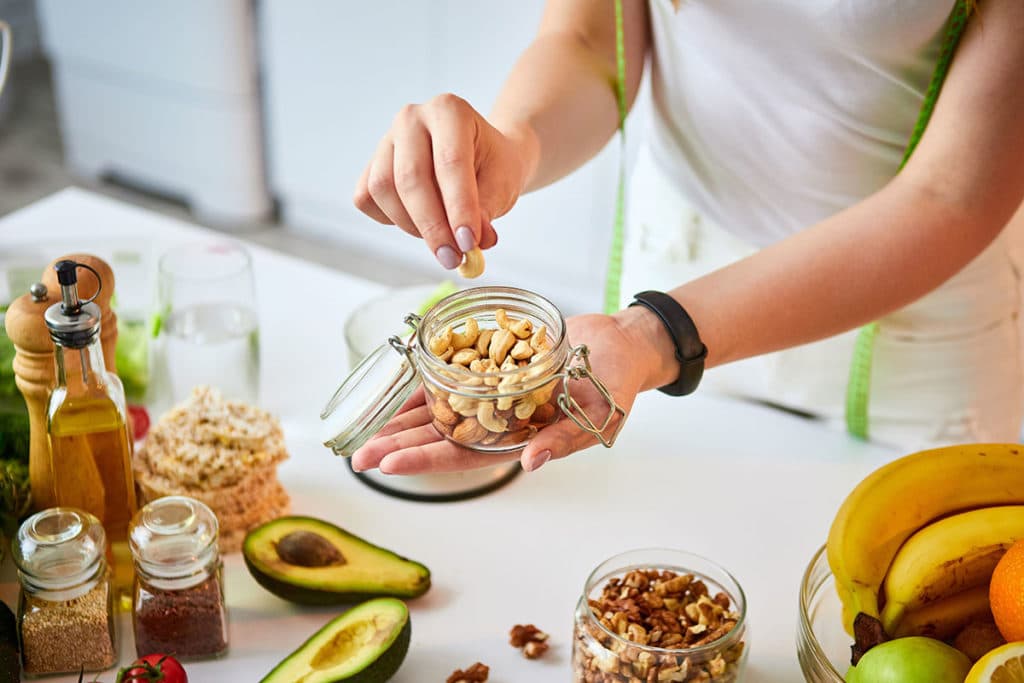
Why we love PPFF
One of the reasons we love PPFF is that it naturally encourages a more balanced way of eating. By combining phytoestrogens, protein, healthy fats and fibre, meals tend to be more satisfying, more nutrient-dense and better at supporting stable energy levels throughout the day.
The fibre also helps nourish the beneficial bacteria in your gut, supporting digestive and overall health.
Phytoestrogens are naturally occurring plant compounds that can have a gentle estrogen-like effect in the body. While they’re much weaker than human estrogen, they may help support women through menopause as estrogen levels decline.
There’s also growing evidence that plant-rich eating patterns may help reduce some menopausal symptoms.³˒⁴
In fact, the European Menopause and Andropause Society released a position statement⁵ summarising the evidence supporting the Mediterranean diet and menopausal health.
PPFF = phytoestrogens
Plant foods contain naturally occurring compounds called phytoestrogens. These are similar in structure to your body’s own estrogen and can bind to some of the same receptors.
This is one reason plant-rich diets, including soy foods such as tofu and tempeh, are often discussed in relation to menopause symptoms. Some research suggests phytoestrogens may help ease symptoms for some women, although not everyone responds in the same way.
Jean Hailes, the well-known women’s Australian women’s health organisation, explains this beautifully:
“In a perimenopausal or post-menopausal woman, when her own body’s estrogen is low, phytoestrogens may help ease the symptoms of low estrogen in about one in three women. This is because about a third of the population has the specific gut bacteria that can metabolise the isoflavones (a type of phytoestrogen) in soy to a more potent phytoestrogen called equol. The amount of isoflavones needed daily to achieve therapeutic effects is contained in about 200g of tofu, or 100g of tempeh,” they say.
“Some studies have shown potential benefits of phytoestrogens regarding cardiovascular risk, bone density and menopausal symptoms. About a third of women who eat a diet that delivers amounts of phytoestrogens typical of an Asian diet (particularly from soy foods) find that their menopausal symptoms improve. This is because only about one-third (and possibly up to a half) of all people have the specific gut bacteria that convert soy isoflavone (phytoestrogen) daidzein, to the more potent form, equol.”
There’s one caveat. Soy supplements are generally not recommended for women at high risk of breast cancer or those who have had breast cancer. We’ve also found they’re best to modulate if you’re very overweight as fat tissue is metabolic. If this applies to you, it’s worth discussing soy foods and supplements with your healthcare professional.
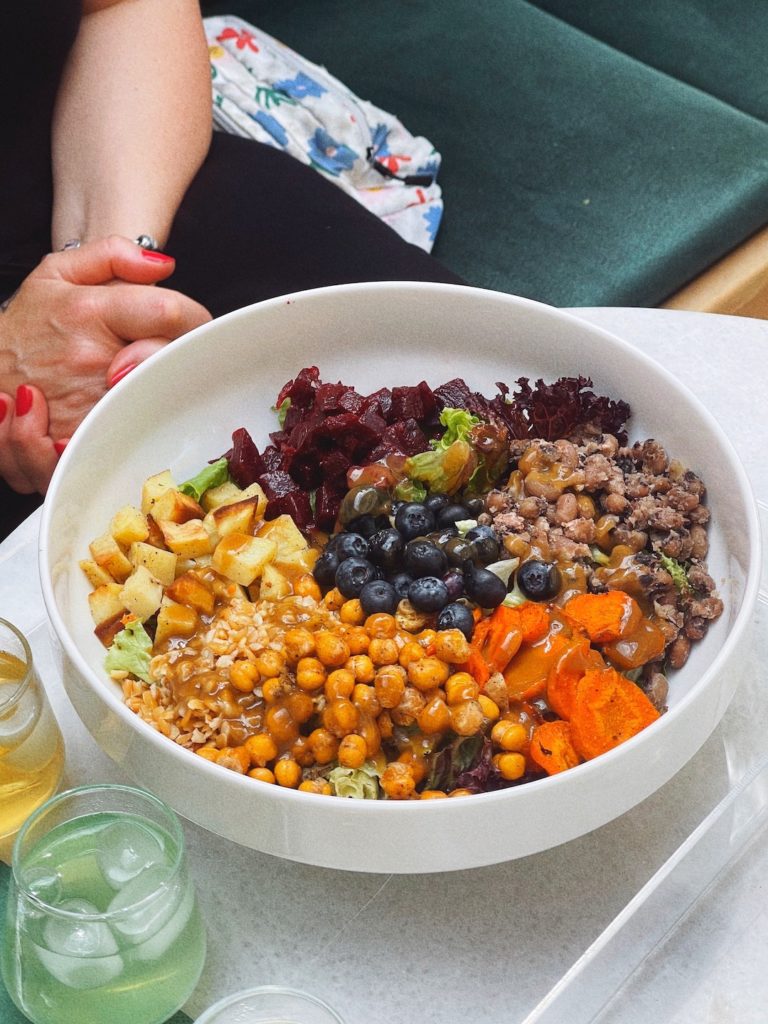
Phytoestrogens are naturally occurring plant compounds that are similar in structure to your body’s own estrogen and can bind to some of the same receptors. They’re found in a wide range of foods including lentils, chickpeas, soybeans, carrots, garlic, onions, oats, rice, tofu, stone fruit, and nuts and seeds such as walnuts, almonds, sunflower seeds and sesame seeds.
You might like: 3 Safe, Natural, No-Estrogen Alternatives To HRT
PPFF = protein
If there was ever a time to make friends with protein, this is it. During peri- and post-menopause, adequate protein becomes increasingly important for maintaining muscle mass, strength and healthy ageing.⁶
Protein also helps keep meals satisfying and supports stable energy levels throughout the day. Not bad for something that’s often overlooked in a bowl of cereal or a slice of toast.
Furthermore, a 2021 study⁷ found that sarcopenia, the age-related loss of muscle mass and strength, was more common in late peri- and post-menopausal women than in early perimenopausal women.
From a weight management perspective, protein can be incredibly helpful. It helps keep you fuller for longer, supports stable blood sugar levels and may help reduce cravings. Protein also requires more energy to digest than carbohydrates or fats, a phenomenon known as the thermic effect of food.⁹
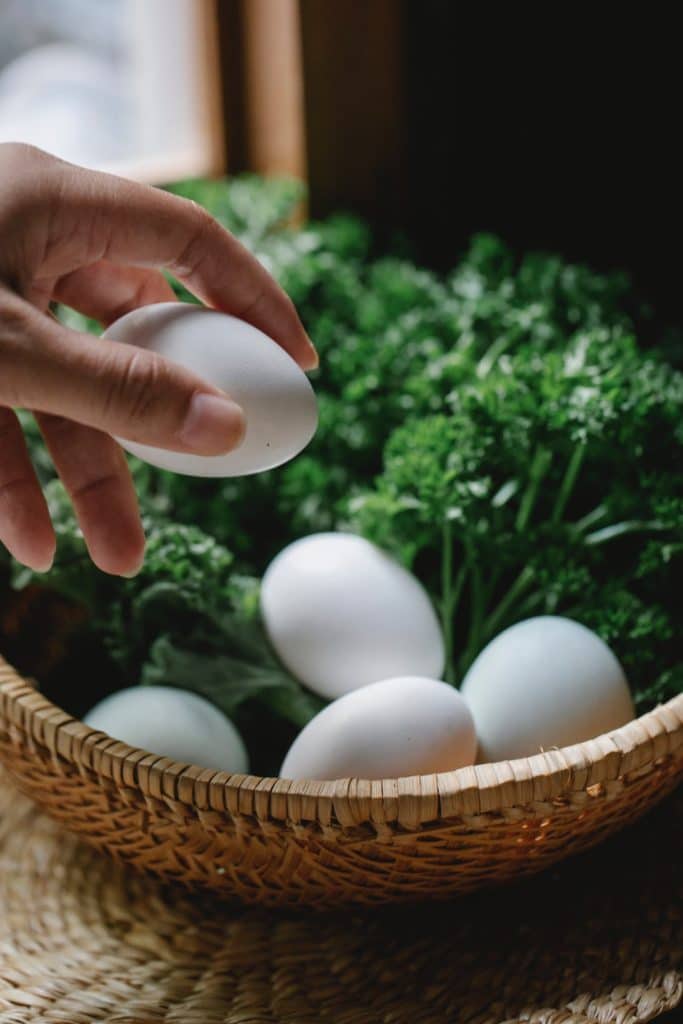
Getting into the habit of prioritising protein at breakfast is a great place to start. Think eggs, Greek yoghurt, chia pudding or a protein-rich smoothie. Then aim to include protein at each meal throughout the day.
Menopause nutrition expert Dr Wendy Sweet PhD recommends women aim for around 1.2 to 1.4 grams of protein per kilogram of body weight per day. In practical terms, that often looks like around 20 to 30 grams of protein per meal, depending on your size, activity levels and goals. A palm-sized serving of protein typically provides around 20 to 30 grams.
Don’t worry if you’re nowhere near this right now. Most women are surprised when they discover how little protein they’re actually eating. Start by adding a little more at breakfast and build from there.
You might like: 7 Reasons Strength Training Is Vital For Women In Midlife
PPFF = fibre
Wonderful fibre. Most of us don’t eat enough of it, yet it’s one of the most important nutrients for healthy ageing, gut health and metabolic health.
Gastroenterologist Dr Will Bulsiewicz says 19 out of 20 people don’t eat enough fibre, which may contribute to poor gut health and increase the risk of chronic disease. A healthy gut can influence everything from digestion and immunity to mood and overall wellbeing.
According to NRV (Nutrient Reference Values for Australia and New Zealand), women should aim for around 25g of fibre each day.
Dietary fibre is found in plant foods such as vegetables, fruit, legumes, oats, quinoa, nuts and seeds.
There are two types of fibre:
- Soluble – helps support healthy blood sugar levels, feeds beneficial gut bacteria and can help keep you feeling fuller for longer.
- Insoluble – adds bulk to stool and helps keep your digestive system moving regularly, supporting healthy bowel function.
You might like: Menopausal Weight Gain | 3 Ways To Lose Weight After 40
PPFF = (healthy) fat
For years, dietary fat got a bad reputation. Thankfully, we now know that healthy fats are an important part of a balanced menopause diet.
Healthy fats help keep you satisfied after meals, support stable energy levels and assist your body in absorbing fat-soluble vitamins such as vitamins A, D, E and K. They’re also an important building block for cell health and play a role in brain function.
Some of the best sources of healthy fats include extra virgin olive oil, avocado, nuts, seeds, olives and oily fish such as salmon, sardines and mackerel.
The Mediterranean diet, widely regarded as one of the healthiest eating patterns in the world, is naturally rich in healthy fats and has been associated with a range of benefits for healthy ageing.
The key is choosing mostly whole-food sources of fat rather than highly processed foods. Think avocado on toast (mix it with edamame for protein it’s amazing), a drizzle of olive oil on your salad, or a handful of nuts with fruit as a snack. Simple, satisfying and delicious.
Conclusion
Menopause is a time of change, and what worked for your body in your 20s and 30s may not work quite as well now.
The good news is that small changes can make a big difference. By prioritising phytoestrogens, protein, healthy fats and fibre, you can support your energy, gut health, muscle mass and overall wellbeing during this stage of life.
There’s no such thing as a perfect menopause diet, but building your meals around these four pillars is a simple place to start.
Conclusion
We believe the best menopause support comes from a multi-pronged approach. Food, hydration, movement, sleep, stress management and gut health all have an important role to play.
That’s one reason we’re so passionate about gut health. Emerging research continues to highlight the connection between the gut microbiome and everything from digestion and immunity to mood and metabolic health.
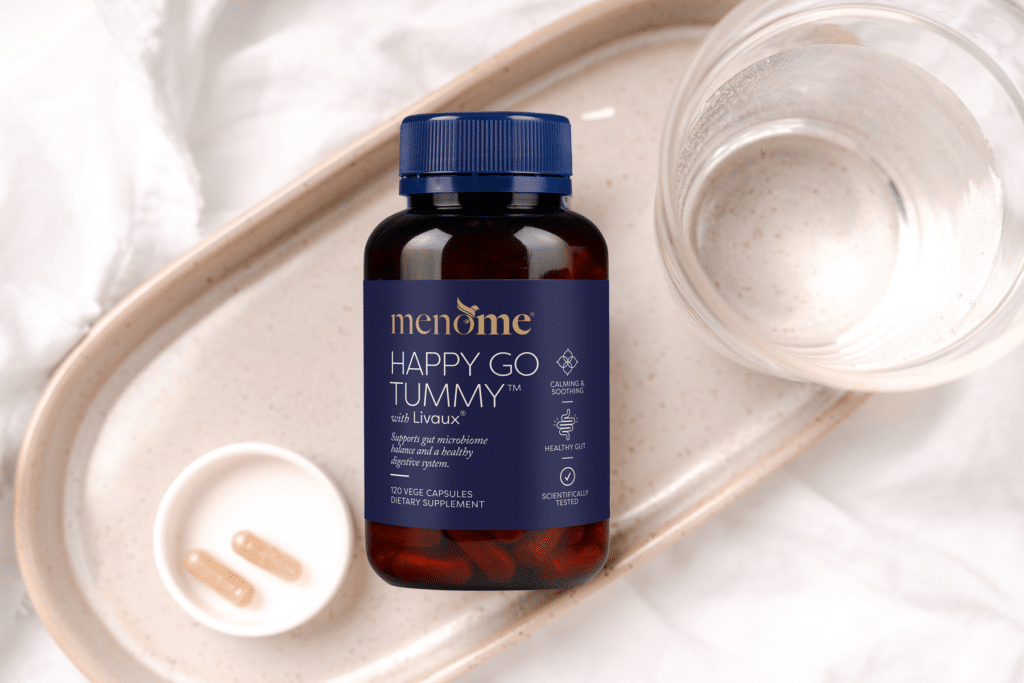
That’s also why we created Happy Go Tummy®. A healthy gut won’t solve every menopause sign, but it can be a valuable part of supporting your overall health and wellbeing during this stage of life.
Share with a friend
Related Articles

References:
- Silva TR, Oppermann K, Reis FM, Spritzer PM. Nutrition in Menopausal Women: A Narrative Review. Nutrients. 2021 Jun 23;13(7):2149. doi: 10.3390/nu13072149. PMID: 34201460; PMCID: PMC8308420.
- Barnard ND, Kahleova H, Holtz DN, Del Aguila F, Neola M, Crosby LM, Holubkov R. The Women’s Study for the Alleviation of Vasomotor Symptoms (WAVS): a randomized, controlled trial of a plant-based diet and whole soybeans for postmenopausal women. Menopause. 2021 Jul 12;28(10):1150-1156. doi: 10.1097/GME.0000000000001812. PMID: 34260478; PMCID: PMC8462449.
- Beezhold B, Radnitz C, McGrath RE, Feldman A. Vegans report less bothersome vasomotor and physical menopausal symptoms than omnivores. Maturitas. 2018 Jun;112:12-17. doi: 10.1016/j.maturitas.2018.03.009. Epub 2018 Mar 14. PMID: 29704911.
- Sayón-Orea C, Santiago S, Cuervo M, Martínez-González MA, Garcia A, Martínez JA. Adherence to Mediterranean dietary pattern and menopausal symptoms in relation to overweight/obesity in Spanish perimenopausal and postmenopausal women. Menopause. 2015 Jul;22(7):750-7. doi: 10.1097/GME.0000000000000378. PMID: 25513984.
- https://emas-online.org/emas-position-statement-the-mediterranean-diet-and-menopausal-health/
- Chernoff R. Protein and older adults. J Am Coll Nutr. 2004 Dec;23(6 Suppl):627S-630S. doi: 10.1080/07315724.2004.10719434. PMID: 15640517.
- Ko J, Park YM. Menopause and the Loss of Skeletal Muscle Mass in Women. Iran J Public Health. 2021 Feb;50(2):413-414. doi: 10.18502/ijph.v50i2.5362. PMID: 33748008; PMCID: PMC7956097.
- Bacciottini L, Falchetti A, Pampaloni B, Bartolini E, Carossino AM, Brandi ML. Phytoestrogens: food or drug? Clin Cases Miner Bone Metab. 2007 May;4(2):123-30. PMID: 22461212; PMCID: PMC2781234.
- Douglas Paddon-Jones, Eric Westman, Richard D Mattes, Robert R Wolfe, Arne Astrup, Margriet Westerterp-Plantenga, Protein, weight management, and satiety, The American Journal of Clinical Nutrition, Volume 87, Issue 5, May 2008, Pages 1558S–1561S, https://doi.org/10.1093/ajcn/87.5.1558S