

Menopause. And, here’s the thing. It’s really an umbrella term because it covers both peri- and post-menopause. The rollercoaster years and the “let’s amp up that health warrant of fitness” years!
But whatever term you use, the “M word” alone can stir up a mix of emotions: trepidation, curiosity, relief, frustration, hope. It’s a natural life transition that every woman experiences differently, yet it’s often spoken about as if it’s the same for everyone.
Menopause is a time of transformation. And like any transformation, it comes with choices.
Some women choose to use patches or other forms of hormone therapy. And others can’t, don’t want to, or prefer a different path through natural support. The key? Knowing what’s right for you.
Because true empowerment during menopause isn’t about what you choose – it’s about having the freedom and confidence to choose.

1. Navigating The Menoverse’s Debate
Can we just say it out loud? For way too long, the menopause conversation has been divided. But now, with it becoming such a big topic, the debate is growing even more.
You’re either pro-HRT* or anti-HRT*, “natural only” or “medical all the way.” But menopause isn’t that black and white – it’s very individual.
NB: The correct term in 2025 is actually MHT or Menopause Hormone Therapy, recognising that it’s a support, not a replacement.
A great analogy is to imagine Mary as an apple, Jane as a pear, and Linda as a peach. They’re all fruit, but different.
Some women thrive using hormone therapy (HRT/MHT). But others can’t use it due to medical reasons. And plenty simply prefer to support their bodies naturally.
At MenoMe®, we don’t take sides – but we are here to stand by your side as your support crew.
Our philosophy is simple: every woman deserves unbiased information, compassionate support, and the confidence to make informed choices that feel right for her body.
That’s what empowerment truly means: being confident, curious, and in tune with your body – not pressured by anyone else’s version of “right.”

2. What’s Happening in Your Body During Menopause (and Why It Matters)
Before exploring your options, it helps to know what’s really going on under the surface. Actually, truth be told, it’s crucial.
As estrogen and progesterone naturally decline, your body shifts from reproductive mode into a new hormonal environment. This transition – often beginning in your 40s (sometimes mid- to late-30s!) and continuing into your 50s – is what we call perimenopause and post-menopause. And it’s not a fast transition; it’s gradual and can last around 10 years.
- Perimenopause:Progesterone drops and estrogen (notably estradiol) fluctuates, sometimes wildly. You might notice irregular periods, hot flushes, mood swings, and disrupted sleep.
Menopause: Officially marked when you haven’t had a period for 12 months.
• Post-menopause: Estradiol levels are very low, estrone takes over, and you may notice more aches, pains, and need to keep a closer eye on thyroid, heart, gut, liver, and blood sugar.
These hormonal changes can affect almost every system in your body – from metabolism and energy to bone strength, brain function, and emotional well-being.
But here’s the empowering truth: your body isn’t failing you – it’s recalibrating. And you can absolutely support it through the process, whichever path you choose.
Lorem ipsum dolor sit amet, consectetur adipiscing elit. Ut elit tellus, luctus nec ullamcorper mattis, pulvinar dapibus leo.
3. Patched Up: Is HRT/MHT the Right Fit for You?
Menopause Hormone Therapy (MHT, aka HRT) works by replenishing declining hormones – usually estrogen and progesterone, and sometimes testosterone – to reduce symptoms caused by those dips.
Many women report profound relief with hormone therapy: fewer hot flushes, better sleep, more energy, improved mood, and even benefits for bone health. Research supports these experiences, showing hormone therapy can reduce vasomotor symptoms and protect against osteoporosis in many women (1,2).
That said, not every woman can or wants to use hormone therapy. Some have medical contraindications, some experience side effects, and many simply prefer a natural or combination approach. And that’s completely okay.
The key is informed choice. Talk to a qualified menopause specialist, and remember: regular reviews ensure your therapy stays aligned with your body’s needs.
It’s worth noting that even highly respected medical experts caution against taking every social media influencer’s advice as gospel. Millions of followers don’t necessarily equal medical accuracy. So: stay curious, fact-check, and trust your own body first.
At Meno-Me®, we say: if hormone therapy helps you feel better, own it proudly. And if it doesn’t, you’ve got plenty of other powerful tools, and we’ve got great options.
Related: Menopause Hormone Therapy (HRT) – Is It The Magic Pill?
3. Powered Up: Natural Ways To Support Your Body & Thrive
Choosing a natural approach doesn’t mean “doing nothing.” It means using knowledge as power and working with your body, not against it.
A growing body of evidence shows lifestyle medicine and nutritional stragtegies can signficiant reduce menopausal symptoms, improve wellbeing, and support long-term health (3, 4).
We love this approach – it’s worked for us, which is why we’re so passionate about spreading the word.

4. Nutrition That Nurtures Hormonal Harmony
Think anti-inflammatory, Mediterranean-style nourishment.
Including:
• fruit and vegetables (cruciferous are your friends!)
• lean proteins
• whole grains
• soluble fibre
• and that liquid gold, EVOO (extra virgin olive oil)
And if you’re not very overweight (ask us why this matters), phytoestrogens from soy, flaxseed, and legumes may help moderate hot flushes and support heart health (5).
Prioritise protein, healthy fats, and colourful plants.
Steer well clear of saturated fats to look after your heart and liver.
Related: How Food Can Help You Have Your Best Menopause
5. Movement That Builds Strength and Resilience
Strength training is your midlife superpower. Add cardio (without overdoing it), plus gentle movement like yoga for mood and stress balance (6).
The best exercise? The one you’ll do – and enjoy.
Related: The Brain-Changing Effects of Exercise
6. Rest and Recovery for Regeneration
Sleep disruption is common thanks to hormonal changes.
Caffeine? We love it too – but it spikes cortisol, blocks adenosine, and can irritate your bladder. (Water might take this personally.)
Mindfulness, journaling, and breathwork aren’t just trends – they’re powerful tools for nervous system regulation.
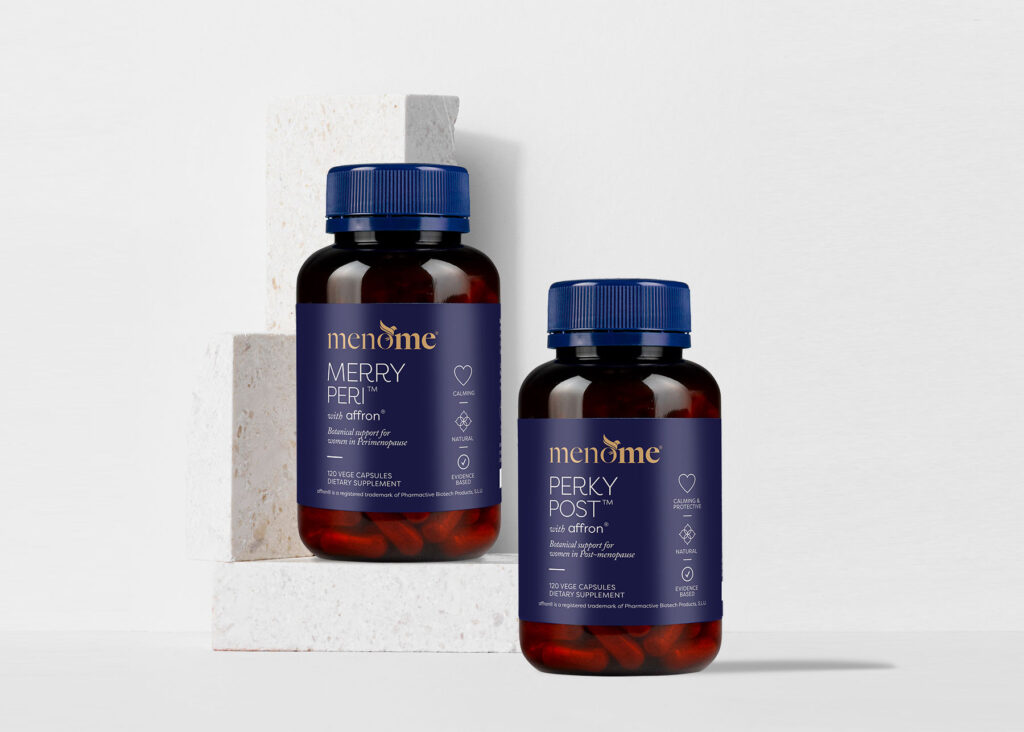
7. Targeted Natural Support (Meet Merry Peri® and Perky Post®)
Supplements can bridge the gap where daily life falls short.
- Merry Peri®for perimenopause: supports hormonal shifts, sleep, energy, and mood.
- Perky Post® for post-menopause: supports vitality, bone and brain health, and emotional wellbeing.
Natural, evidence-backed, and formulated with care – because “natural” doesn’t mean “unscientific.”
Related: Feeling Off? How Merry Peri® & Perky Post® Can Help
- The Middle Ground: Blending Hormone Therapy with Natural Support
8. The Middle Ground: Blending Hormone therapy with Natural support
Good news: you don’t need to pick one camp and stay there.
Many women combine MHT/HRT with nutrition, movement, stress support, and targeted supplements. Hormone therapy can do a lot – but not everything.
Think of it as teamwork:
• hormones support the medical side,
• natural strategies support whole-body resilience.
Your needs may evolve (because peri- and post-menopause are dynamic), and your approach can evolve too.
Related: 7 Natural Solutions To Make Your Menopause Easier: No HRT Required
- Knowledge Is Power – Listening to Your Body Is the Secret Sauce
9. Knowledge is Power – Listening to Your Body Is the Secret Sauce
We love science. But we also love the quiet inner knowing your body gives you.
Tune in. Track your symptoms. Notice your sleep, mood, energy.
Science gives you options. Your body tells you which ones to choose.
Pair them together and…that is empowerment.
Summary:
Your Menopause, Your Way, Your Journey
Every woman’s menopause is a story of resilience, rediscovery, and renewal.
Maybe yours involves hormone therapy.
Or, maybe it’s all-natural.
And maybe it’s a beautiful, evolving mix.
There’s no right way. There’s just your way.
Wherever you are, we see you. No shame. No judgment. No quick fixes.
You’ve got this – and we’ve got you!
References
- The North American Menopause Society. (2022). The 2022 Hormone Therapy Position Statement of The North American Menopause Society. Menopause, 29(7).
- British Menopause Society. (2023). HRT: Benefits and Risks Explained.
- El Khoudary, S.R. et al. (2020). Menopause Transition and Cardiovascular Health. Journal of the American Heart Association.
- Davis, S.R., et al. (2015). Understanding Weight Gain at Menopause. Climacteric, 18(5).
- Messina, M. (2014). Soy Foods, Isoflavones, and the Menopausal Transition. The American Journal of Clinical Nutrition.
- Daley, A.J. et al. (2019). Exercise for Vasomotor and Other Menopausal Symptoms: A Review. Maturitas, 125.
