There’s a moment many women expect after menopause – the whole thing wraps up, signs and symptoms disappear, and the body goes back to the way it was.
Lovely idea. But not always how it goes.
Once you’ve gone 12 months without a period, you’re in post-menopause. That part is simple enough. What’s less simple is the bit nobody really explains: post-menopause does not always mean symptom-free.
Some things settle. Some hang about. The NHS, the National Institute on Aging, and the U.S. Office on Women’s Health all note that some signs, symptoms and health changes can continue well beyond the final period.
So if you expected to get to a clean finish line, you might be disappointed.
 What changes in post-menopause?
 What changes in post-menopause?
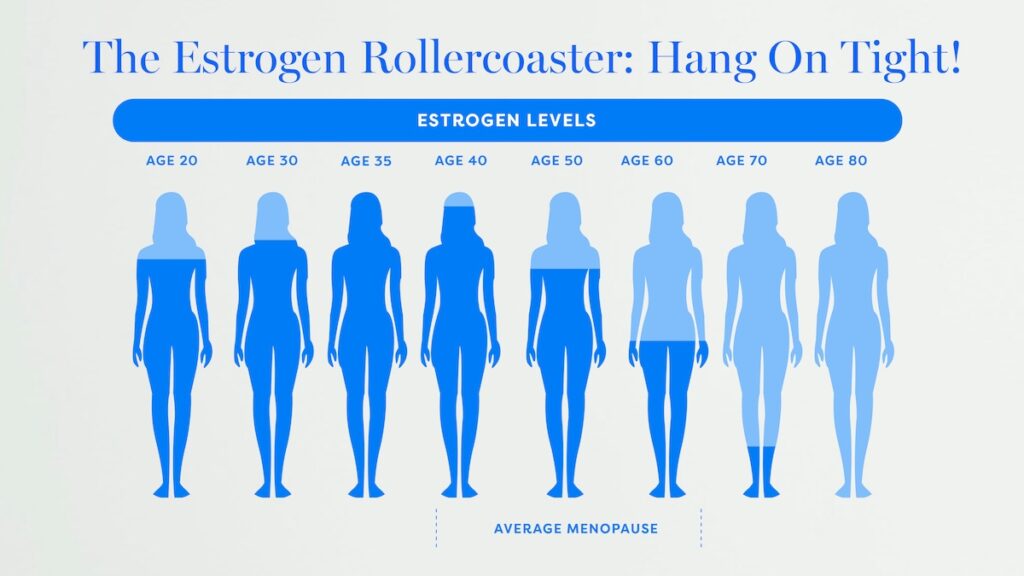
In post-menopause, estrogen reverts to a weaker form known as estrone (estradiol is most dominant during your reproductive years). That shift can affect far more than periods and hot flushes – sleep, vaginal and bladder comfort, bone health, heart health, blood sugar and body composition, skin, hair, and muscles included.
That’s why post-menopause deserves attention. It isn’t just “the bit after menopause.” It’s a distinct stage with its own life-changing considerations.
Common post-menopause symptoms
Some women feel sooo much better once they reach post-menopause. Others still have a few lingering signs who clearly don’t know when to leave.
Vaginal dryness and bladder changes
One of the common post-menopause issues is genitourinary syndrome of menopause, or GSM – covering vaginal dryness, irritation, discomfort during sex, urinary urgency, and bladder irritation. (And no, it’s not fun!) Unlike hot flushes, which usually improve over time, the Australasian Menopause Society notes that GSM symptoms tend to worsen. And it’s estimated to affect more than half of post-menopausal women.
This is one of those signs that’s easy to dismiss but surprisingly hard to live with. If things feel drier, more sensitive, or less comfortable than they used to, that’s not bad luck. It’s common, and it’s worth checking out.
Sleep
Poor sleep is another persistent one. A 2024 meta-analysis of 37 studies and nearly 30,000 menopausal women found the pooled prevalence of poor sleep quality was 50.8%. That’s not a small subgroup. That’s half.
Sometimes sleep is disturbed by hot flushes or night sweats. Sometimes it’s insomnia, mood, stress, or the specific joy of waking at 3am and immediately remembering something embarrassing from 2004. Either way, it’s common, it’s worth taking seriously, and it is not a personal failing. Jean Hailes for Women’s Health identifies sleep disruption as one of the most commonly reported and most underaddressed symptoms of the menopause transition and beyond.
Weight, body shape and bloating
Many women notice changes around the middle after menopause, even without significant changes in habits. It’s quite complex, but getting a handle on it is also very important for your health, especially the risk of metabolic syndrome and type-2 diabetes.
Bloating can also continue. It’s not always weight gain in the way people assume – sometimes it’s digestive discomfort, feeling puffy or sluggish, or just not quite right in your own body. And that’s not imagined as your digestive/gut health shifts significantly.
Even so, women are often too quick to blame themselves for what is actually a mix of hormonal, digestive, sleep, and lifestyle factors. Jean Hailes notes that weight changes after menopause are influenced by multiple factors beyond diet alone. And we can help with that. Check out Meno-Coaching here.
Hair and skin
Hair thinning is more common post-menopause than most women are told. A cross-sectional study of 178 healthy postmenopausal women found 52.2% had hair loss – and 60% reported low self-esteem as a result, which says everything about how “cosmetic” this feels when you’re living it.
Skin often becomes drier and thinner after menopause, too, and many women find that it suddenly needs more care from them than it used to. That’s not vanity. That’s biology being high-maintenance (smile-y face).
Joint aches and stiffness
That slightly creaky feeling first thing in the morning is also widely reported. The Australasian Menopause Society lists joint aches and stiffness among common symptoms that can persist into post-menopause.
But it’s not just your joints, muscles and fascia can often be affected too. A great tool from lifestyle science is extra-virgin olive oil. About 20-30mls (1-2 tablespoons daily) of good quality olive oil, which gives you a kick in the back of the throat, has compounds in it that act similarly to ibuprofen.
Hot flushes – yes, still
Many women assume hot flushes should be finished by post-menopause. Sometimes they are. Sometimes they absolutely are not.
The long-running SWAN study, published in JAMA Internal Medicine, found that frequent vasomotor symptoms lasted more than seven years for over half the women studied, and persisted for a median of 4.5 years after the final period.
So if you’re post-menopausal and still peeling off layers in the supermarket, it’s a thing.
However, after 60, some experts link hot flushes with hypertension, so ensure you’ve up-to-date with your health checks.

Why long-term health matters more now
Post-menopause isn’t only about managing symptoms. It’s also a stage where a few bigger-picture things deserve attention.
Bone density can decline more quickly once estrogen drops. Healthy Bones Australia notes that women can lose bone rapidly in the years following menopause, increasing the risk of osteoporosis over time.
The Ministry of Health NZ similarly identifies post-menopause as a key risk period for bone loss, and recommends calcium, vitamin D3, and weight-bearing activity as part of long-term bone care.
Heart health is the other major consideration.
The Australasian Menopause Society identifies cardiovascular disease as the leading cause of death in post-menopausal women, and highlights post-menopause as an important window for prevention and heart health support.
None of that is a doom spiral. It’s just useful to know, so you know where to put your focus.

What helps in post-menopause
The useful stuff is often boringly consistent, which is frustrating but true. But that’s OK because our bodies love boring.
So strength training matters more now than it did before. But if you don’t see yourself as a weight lifter, don’t panic. It all counts; yoga and Pilates are strength exercises, as is heavy housework. You can build up to weight training if you want to.
The Australasian Menopause Society and Jean Hailes both recommend regular muscle-strengthening activity for bone density, muscle mass, balance, and mental wellbeing.
Also, protein, fibre, and hydration support digestion, energy, and metabolic health. The research shows that a Mediterranean-style of eating built around fibre-rich vegetables, whole grains, fish, reduced red meat, and healthy fats is a foundation for healthy ageing after menopause. It might not be glamorous, but it all counts.
On symptoms specifically, starting with whatever is bothering you most – sleep, bladder comfort, mood, bloating – is a far saner approach than trying to overhaul everything at once.
And if something feels genuinely off – persistent bladder symptoms, post-menopausal bleeding, painful sex, worsening hot flushes, or anything significantly affecting daily life – please go and have a chat with your GP or a menopause specialist.
One thing worth flagging
Any bleeding after menopause – or that 12-month mark – should be checked. So should ongoing pelvic pain, or worsening signs.
The bottom line
Post-menopause can be less turbulent than perimenopause – but it isn’t always symptom-free, and how you live is vital for long-term health.
If your body still feels a bit unfamiliar, you’re not behind or making a fuss.
You’re in a stage that deserves support. And considerably more honest conversation than most women have been offered so far.
I know, I feel like a very different person from the one who entered perimenopause and many of the women I’ve spoken to do too.
Hope this helps. If you have more questions or need support, email me here.
Just so you know: this article is written by a real person who has studied the physiology of menopause and women’s healthy ageing. While we may use AI as an assistant, the research, insights and heart behind every piece comes from us.
References
- Australasian Menopause Society — menopause.org.au
- New Zealand Menopause Society — menopause.org.nz
- Jean Hailes for Women’s Health — jeanhailes.org.au
- Ministry of Health New Zealand — health.govt.nz
- Healthy Bones Australia — healthybones.com.au
- Avis NE et al. Duration of Menopausal Vasomotor Symptoms Over the Menopause Transition. JAMA Internal Medicine.
- Jia Y, Zhou Z, Cao X. Prevalence of poor sleep quality during menopause: a meta-analysis. Sleep and Breathing, 2024.
- Gandhi J et al. Genitourinary syndrome of menopause: an overview of clinical manifestations, pathophysiology, etiologies, evaluation, and management. AJOG.
- The Menopause Society. Genitourinary Syndrome of Menopause.
- Chaikittisilpa et al. Prevalence of female pattern hair loss in postmenopausal women.