

Your periods are still showing up, and you’re too young for menopause. Aren’t you?
Who me? It feels way too early to consider that, you think. But your sleep has gone strange. You feel hotter than you used to. And you’re pretty sure your mood or your cycle has changed lately.
Could this be perimenopause?
It could.
Perimenopause, or peri is the lead-up to your final period, and it often begins in your 40s. Even late 30s. Changes to your cycle are a common clue, but you may also notice shifts in sleep, temperature or mood as well. There’s no single test that settles it (yet). Your age, cycle and pattern of shifting ‘usuals’ all help paint the picture.
What is perimenopause?
Perimenopause means “around or near menopause.” During peri, sex hormone levels fluctuate and your periods may become less predictable. They might arrive closer together, further apart, or be heavier or lighter.
The official definition of menopause is your final period, confirmed once you’ve gone 12 months without one (provided there’s no other reason your periods have stopped).
You can find more on the ages and stages in What Age Does Menopause Start?.
What changes might you notice?
For many women, periods provide the first hint. But the changes can reach beyond your cycle. You might notice:
- Mood unpredictability
- Rage and irritability
- Feeling less able to handle stress
- Sleep feels more difficult (even if you’ve always been a ‘sleeper’)
- Brain fog or trouble concentrating
- Breast tenderness, headaches or aching joints
- Changes in how your body stores weight
- Hot flushes, night sweats, or feeling hotter more often
You don’t need to tick every box. And, contrary to what you might hear, you don’t need hot flushes to be in perimenopause. Many of us don’t have them, or they come later.
For a deeper dive into the potential signs, see our 34 Symptoms of Perimenopause (& Counting). Think of that article as a reference list and know that more signs are being uncovered all the time, but it’s a good starting point. And this guide is about what to do when you start joining the dots.

Yes. Some women notice changes before their periods become noticeably irregular. A regular cycle on its own doesn’t shout “hey, you’re in peri”.
By the same token, sleep problems, low mood, irritability or weight changes aren’t automatically caused by perimenopause. Age, your cycle, your health history and the combination of changes all play a role.
That’s why it helps to notice what’s changed for you, rather than compare yourself with somebody else’s checklist because we’re all different.
How do you work out what’s going on?
Start by keeping a simple note of your periods and any changes that are bothering you. To help you download our handy SYMPTOM TRACKER.
Include when they happen and how they affect your day or night. A few weeks of notes can make things clearer.
If you’re under 45, if your bleeding is unusually heavy or concerning, if some signs are disrupting your life, and you suspect you’re in perimenopause it helps to speak with someone who works with menopausal women because Pregnancy and other conditions can also come with similar signs and symptoms.
Hormone blood tests aren’t routinely needed to identify perimenopause in women over 45; levels fluctuate, and a single result isn’t considered reliable. The Menopause Society recommends keeping track of your signs and symptoms. And remember, hormonal contraception can also make the usual period hints harder to read.

What can you do next?
You can start with the basics that support you now: protect your sleep where you can, eat regularly and well, move your body in a way you enjoy, and put in place some stress recovery rituals (breathwork is great – try the 4-7-8 technique here).
And remember, there’s no prize for waiting until things become unbearable.
If you’re unsure which stage you’re in, take the MenoMe® quiz as a starting point. It isn’t a diagnosis, but it can help you frame the questions you want to ask a specialist.
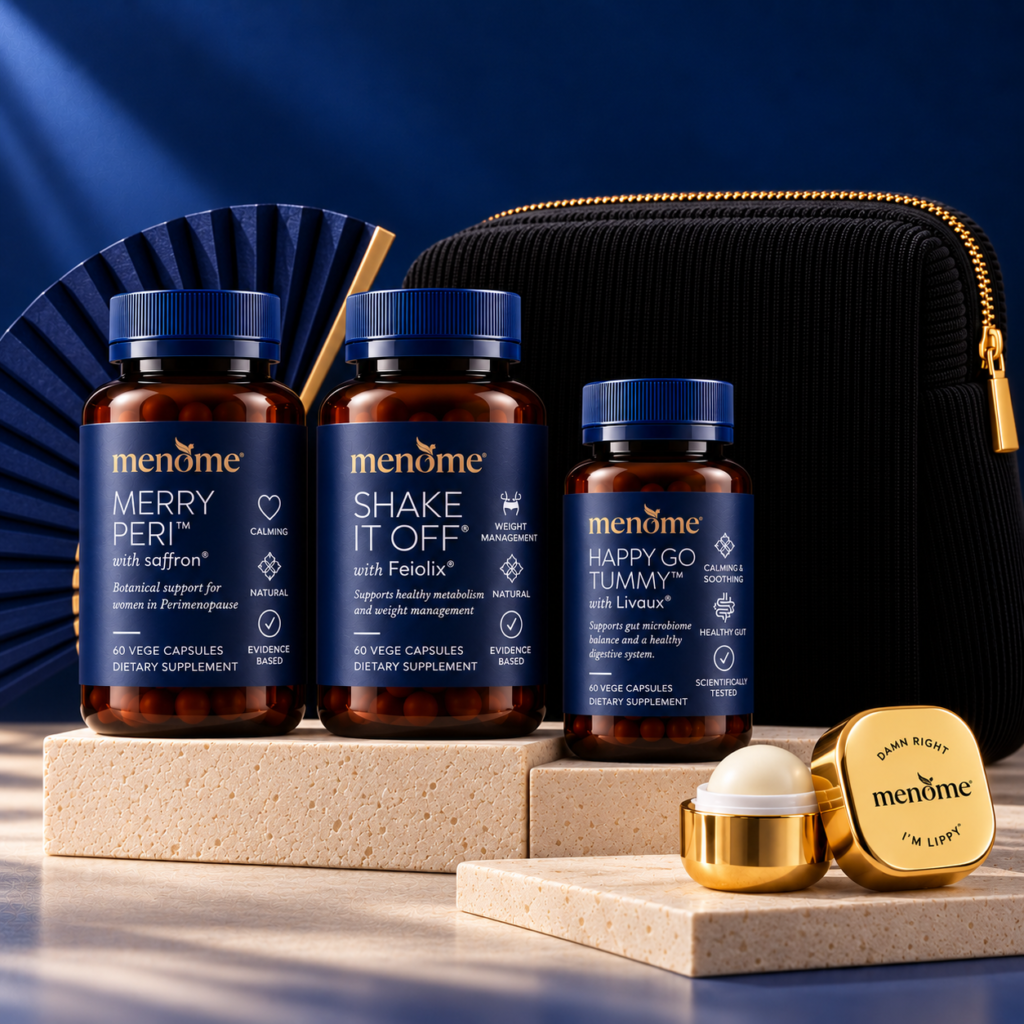
And if you’re exploring natural evidence-based support for perimenopause, Merry Peri® is our formula designed for this stage. Start with understanding what’s happening; then choose the support that fits you. We’ve put together a wonderful Peri Starter Kit here.
And if you want to understand more about what’s happening with your body and explore natural, lifestyle science support, you can book a 1-1 Menopause Consultation with us here.
Disclaimer: Our articles are guidelines only and should never be taken as medical advice. Any signs and symptoms you’re experiencing could be due to several reasons. If you’re experiencing ongoing signs, please see your health professional.
And just so you know: this blog is written by a real person who has studied the physiology of menopause and women’s healthy ageing. While we may use AI as an assistant, the research, insights and heart behind every piece comes from us.
Sources:
NHS: what are menopause and perimenopause?