
If you want to do everything you can to manage menopausal weight gain and stop your waistline from slowly expanding, exercise helps.
But exercise during menopause isn’t just about your weight. It’s one of the best things you can do for your health, strength and wellbeing as you move through this stage of life.
So, let’s talk about why.
Did you read “Menopausal weight gain – it’s real, it’s necessary, it’s stubborn!“? In it, I talked about the changes that happen to our bodies as estrogen levels decline.
Fat tissue isn’t simply somewhere your body stores excess energy. It can also produce small amounts of estrogen after menopause, when the ovaries are no longer producing estrogen in the same way they once did.
At the same time, hormonal changes, ageing, loss of muscle mass, lifestyle and genetics can all influence where we store fat and how our body composition changes. For many women, that means noticing more weight around the middle than they had before.
And yes, that can be frustrating.
But menopause doesn’t mean you have to spend the rest of your life fighting your body.
Our bodies naturally change as we move through our 40s, 50s and beyond. We may not have exactly the same shape or body composition we had in our teens and twenties – and that’s OK.
What we don’t want is excess weight, particularly around the waist, creeping up unchecked and potentially affecting our long-term health.
That’s where exercise becomes so important.
Why exercise matters for menopause and weight gain

In her book “Menopause Without Weight Gain”, Debra Waterhouse (M.P.H., R.D.) talks about the important role exercise can play in maintaining muscle, supporting metabolism and managing body fat as we move through menopause.
And that’s good news if you’re worried about menopausal weight gain.
But here’s the thing. Exercise at menopause is about so much more than the number on your scales or the size of your waist.
As estrogen levels decline and we get older, maintaining our muscle mass, bone strength, heart health, mobility and fitness becomes increasingly important.
In other words, this is a time of life when your body really does need you to move.
Not simply because you want to lose weight, or because you want to get your old body back.
But because regular exercise can help you stay stronger, healthier and more independent for the years ahead. And there are some very good reasons why.
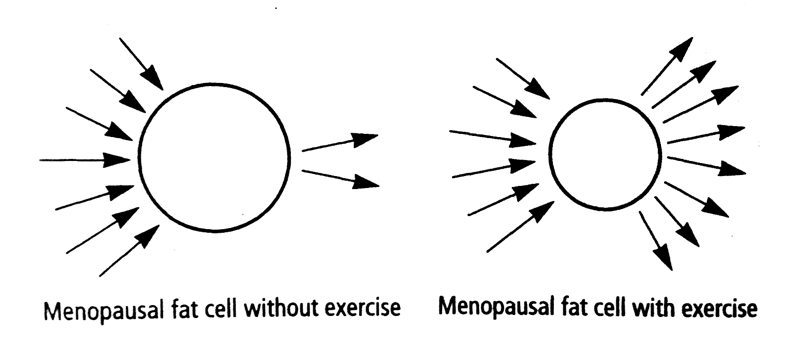
The arrows ‘in’ the above image represent fat-storing enzymes, the arrows ‘out’ represent fat-releasing enzymes.
Regular exercise will also help you:
- fight fatigue
- recharge your metabolism
- reduce mental sluggishness
- sleep soundly
- stabilise your moods
- diminish your food cravings
- reduce hot flushes
- achieve greater mobility, balance and agility
- strengthen your bones
- reduce your risk of breast cancer and heart disease
- stabilise your blood sugar
- live a long life well
Wow, when you read that list, what is there not to love about exercise?
And the great news is it doesn’t matter how out of shape you feel or how much extra weight you are carrying. Nor does how old or busy you are play a role.
Starting today will make a difference.
Losing Weight & Exercise
Is weight loss is your main motivator for exercise?
Then you need the right combination of exercise to encourage your fat cells to release stored fat.
Aerobic exercise will manufacture fat-releasing enzymes that trigger your fat cells to empty fat into your bloodstream.
While strength training will speed up your metabolism and condition your muscles to burn up released fat.
So you need a combination of both these kinds of exercise.
It is important to note at this point about the amount and intensity of exercise.
Over-exercising is common and may put the body back into the mode of overproducing cortisol and storing fat. However, done well, exercise helps steady hormones and lower cortisol levels.

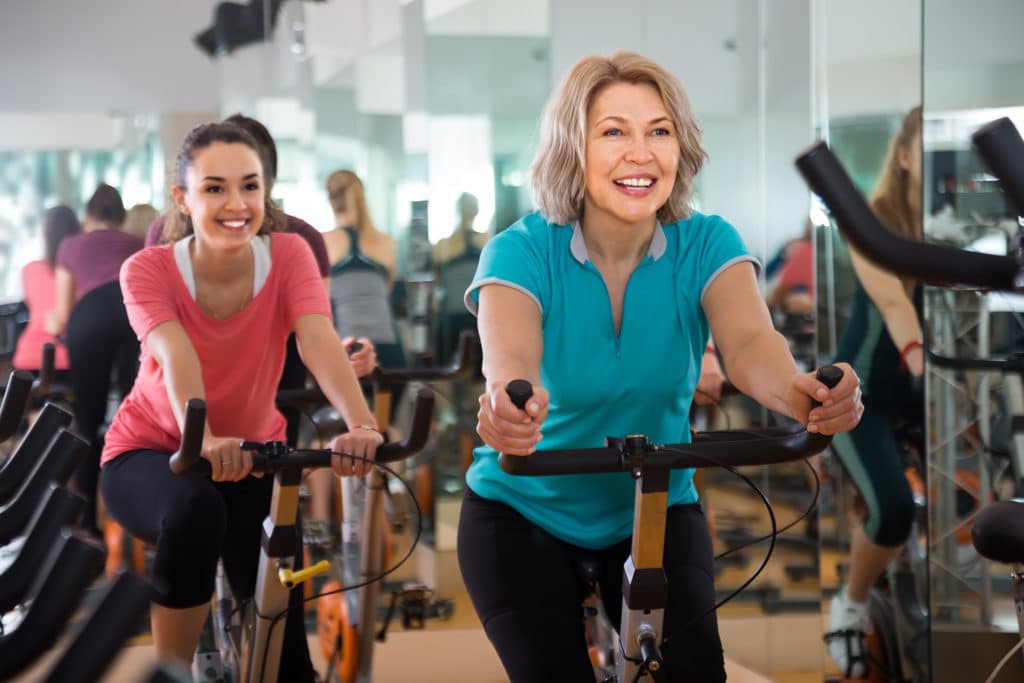
For aerobic exercise, you could try swimming, jogging, cycling, dance, exercise classes like step or walking. But beware, if you’ve been walking as your form of exercise for a few years, it might be time for a shift. Try changing your route, introducing hills or stairs into your walk, developing a jog/walk routine or walk with a pack. But if you are just starting an exercise programme, walking will give you all the metabolism-boosting benefits you need.
Each form of exercise you choose to do will use different muscle groups. If you repeat only the same activity, your muscles and fat cells will become complacent. So cross-train by mixing up your activities. For example, walk one day, swim another, cycle another. This will speed up fat burning as well as prevent boredom! Aim to build up to 60 minutes of aerobic activity four days a week at a moderate intensity.

For strength training, you don’t necessarily have to join a gym and lift weights. You can choose from activities like tennis, squash, basketball, golf, kayaking, bowls, lifting free weights, yoga, Pilates or even gardening. All of these exercises strengthen your muscles.
Each week combine one hour of this type of strength training with your four hours of aerobic activity and you’ll burn fat. As a result, you’ll gain all the other benefits of regular exercise such as living longer, healthier and sleeping, thinking and feeling better!