
How will post-menopause change your life?
Post-menopause can change your life in a number of ways. Some are positive, while others are health considerations worth keeping on your radar.
But first? The basics.
What does post-menopause mean?
Post-menopause is the stage of life that follows menopause. By this point, your ovaries have largely stopped releasing eggs and estrogen levels have settled at a lower level.
A woman is considered to have officially reached post-menopause when she has not had a period for 12 months.
NB: This 12-month mark is also the time when we know for sure that we’ve reached menopause itself. As a word/term, ‘menopause’ is not very useful as it can only be used correctly in hindsight.
The good news about post-menopause
A lot of the less-than-pleasant symptoms that can accompany perimenopause, like heavy periods, mood swings, and night sweats, may diminish or (happily) stop altogether.
If your energy has been depleted during perimenopause, you should find it comes back, however, hot flushes may continue for a while longer for some.
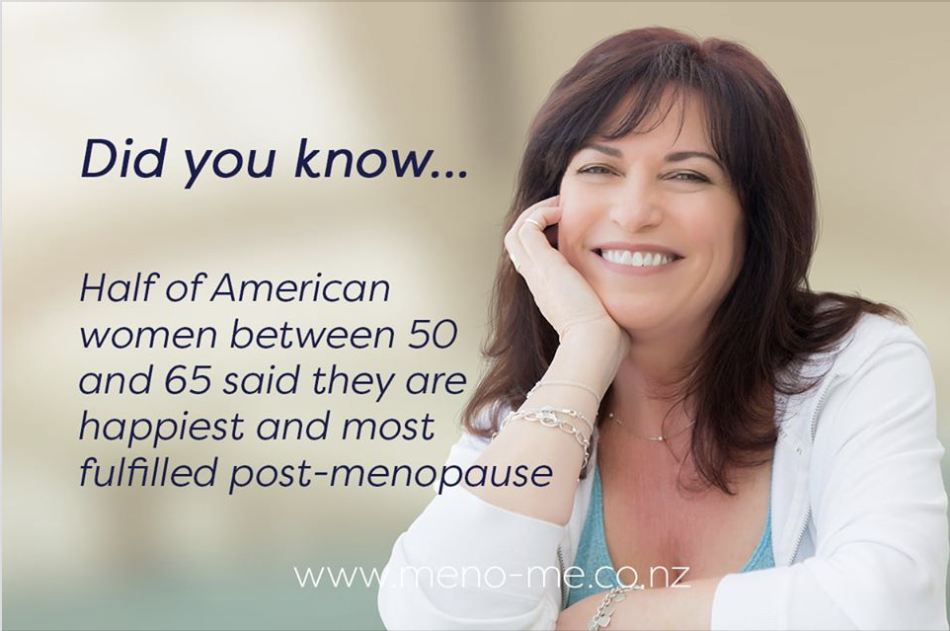
The other good news is that many women report feeling a sense of freedom and happier than they have been for years.
Will I feel better?
For many women, yes. In fact, this is one of the best-kept secrets of menopause. Once the hormonal rollercoaster of perimenopause settles down, many women find they feel more like themselves again, with steadier moods, more predictable energy and no more periods turning up uninvited.
Will signs & symptoms stop?
Some do, some don’t. Heavy periods become a thing of the past, which many women are delighted about. Hot flushes, sleep issues or vaginal dryness may linger for a while longer, but for most women the storm eventually calms.
What happens to my body now?
Your body’s still changing, just in a quieter way. Lower estrogen levels can affect your bones, muscles, heart, brain and metabolism, which is why this is a great time to put your health centre stage.
Can I lose weight?
Yes, you absolutely can. Post-menopause can make weight loss feel less straightforward than it used to, but it isn’t a lost cause. A focus on protein, strength training, sleep and stress management can make a bigger difference than endless dieting ever did.
What happens to my sex life?
There’s no one-size-fits-all answer. Some women notice changes in libido or experience vaginal dryness, while others find sex becomes more enjoyable without the worry of periods or pregnancy. A few tweaks and a little support can often go a long way.
What should I expect next?
Think of post-menopause as a new chapter rather than the end of one. It can be a time of greater confidence, freedom and self-awareness. Yes, there are a few health factors to keep an eye on, but there are also plenty of reasons to look forward to what’s ahead.
Health considerations post-menopause
Lower estradiol levels (we still have some estrogen flowing in our bodies; it’s just a weaker form) mean we become more at risk of health conditions such as osteoporosis and heart disease.
As we age, our risk of conditions such as breast cancer, cardiovascular disease and dementia increases. Changes in hormone levels may play a role, alongside genetics, lifestyle and other health factors.
So it’s essential to look after our health and continue to check in with the doctor for regular health checks.
Osteoporosis
Osteoporosis is a condition that causes bones to become weaker. After menopause, declining estrogen levels can accelerate bone loss, particularly during the first few years. This is why maintaining bone health becomes increasingly important as we age.
If you’re concerned about your bone health, ask your doctor whether a DEXA scan is appropriate for you. This simple test measures bone density and can help identify osteoporosis before a fracture occurs.
https://osteoporosis.org.nz/osteoporosis-fractures/who-is-affected/
Heart disease
As estrogen levels decline after menopause, the risk of heart disease increases. The New Zealand Heart Foundation reports that around 60 Kiwi women die from heart disease every week, while in Australia the figure is approximately 22 women each day.
The most common risk factors include high cholesterol, carrying excess weight, high blood pressure and physical inactivity. Regular health checks can help identify risk factors early, so it’s worth asking your doctor to monitor your blood pressure and cholesterol levels.
FYI: Signs of a heart attack include chest pain as well as – not so well-known – breathlessness, nausea, arm or jaw pain.
Dementia/Alzheimer’s
Alzheimer’s is the most common form of dementia.
Many women worry that menopausal brain fog and forgetfulness are early signs of dementia. Thankfully, this is rarely the case.
Researchers continue to investigate the relationship between menopause, declining estrogen levels and long-term brain health. Estrogen plays an important role in brain function, and some studies suggest hormonal changes during menopause may influence the risk of cognitive decline in later life.
Neuroscientist Dr Lisa Mosconi, Director of Weill Cornell’s Women’s Brain Initiative, and author of The Menopause Brain, describes menopause as a brain-led transition as much as a reproductive one. Her research explores how declining estrogen may affect brain energy use and potentially influence processes associated with Alzheimer’s disease.
What can you do to support your health post-menopause?
While you can’t control every aspect of ageing, there is a lot you can do to support your health and wellbeing in the years after menopause. The small things you do consistently often have the biggest impact over time.
1. Start with your plate. Aim to include quality protein, fibre-rich carbohydrates, healthy fats, low GI carbs and plenty of colourful vegetables at most meals. Protein becomes increasingly important for maintaining muscle mass, while fibre supports gut health, blood sugar balance and heart health.
2. It can also be helpful to include more phytoestrogen-rich foods. Phytoestrogens are naturally occurring plant compounds that can have a gentle estrogen-like effect in the body. Research suggests they may help support women through menopause and may also play a role in bone health.
Foods rich in phytoestrogens include broccoli, beans, peas, carrots, apples, pomegranates, spinach, flaxseeds, sesame seeds, oats, lentils, soybeans, tofu and tempeh.
Phytoestrogen foods include:
- Broccoli
- Beans
- Peas
- Carrots
- Apples
- Pomegranates
- Spinach
- Flaxseeds
- Sesame seeds
- Oats
- Lentils
- Soybeans
- Tofu
- Tempeh
If you’ve heard conflicting messages about soy, rest assured that moderate amounts of traditional soy foods such as tofu, tempeh and edamame are considered safe and nutritious for most people.
3. Cut out refined sugar and all processed foods. Our menopausal bodies and changing digestion can’t handle the work involved in processing them.
4. Know that vitamin D3 and K2 are essential for bone health.
5. Weight-bearing exercise helps keep bone density up.
6. It goes without saying, but ditch cigarettes and reduce alcohol.
7. Reduce stress; this is a biggie. Work with your vagus nerve, which brings you into parasympathetic – or relaxed – mode. Deep, diaphragmatic breathing helps. We like the 4-7-8 technique. Breathe in slowly for 4, hold for 7, exhale slowly for 8. Repeat until you feel the stress diminish.
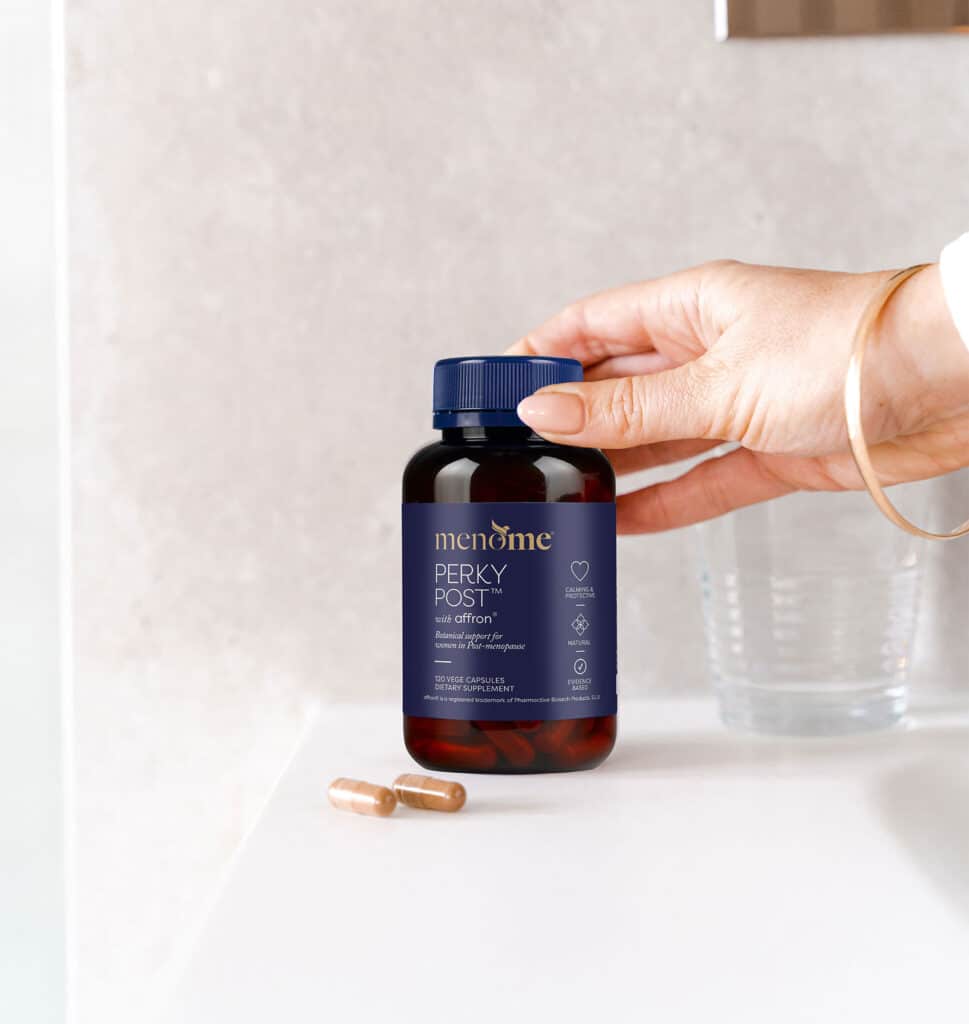
8. We’ve included vitamin D3, K2 and resveratrol in Perky Post® specifically to support bone, brain and heart health post-menopause. You can get yours below.
References
Phytoestrogens and hot flushes:
https://www.ncbi.nlm.nih.gov/pmc/articles/PMC6198681/
Phytoestrogens and bone health:
https://www.ncbi.nlm.nih.gov/pmc/articles/PMC3276006/
Soy and women’s health:
https://nutritionfacts.org/video/who-shouldnt-eat-soy/