
Free shipping during April - Use code: FREESHIP

13 Things I Wish I’d Known About Perimenopause

perimenopause-signs-and-symptoms

Did you know many women aren’t aware of a lot of perimenopause signs and symptoms? And the age at which you start perimenopause, or the lead-up to menopause, is different for everyone. There’s no such thing as a ‘perimenopause age’ – we asked 13 women what they wish they’d known.

What is the average age of menopause?

There’s no average; many women haven’t even heard of perimenopause, let alone realise that it usually begins in their 40s. In some cases, this happens as early as the 30s.

However, there are average stats, and on that basis, the age range for your last period to occur is 45-55, with perimenopause beginning up to 10 years before. To be clear, we’re referencing natural menopause here, not a surgically induced event

What women know (or wish they’d known about perimenopause signs and symptoms)

In my case, I’d heard of peri, but I didn’t think it would affect me until my 50s. And I’m someone whose career has been in women’s health and beauty. In hindsight, I probably began experiencing perimenopause signs and symptoms in my early to mid-40s, but I had no idea. As I was undergoing fertility treatment at the time, I put a lot of the signs down to that. (Yes, I do realise this was grasping at straws, but that’s another story.)

I’ve spoken to many others who’ve been blindsided by the advent of perimenopause signs and symptoms. And when I asked our private Facebook group of 40+ Goddesses, it was a common story.

Education about perimenopause signs and symptoms is lacking

Here’s the thing. Girls are educated about puberty at school, and we’re given a fat file of information when we fall pregnant. However, a lot of doctors don’t know much about menopause (unless it’s their special interest), so education via that platform can be thin on the ground.

So we took inspiration from women who’ve been there – here’s:

13 Things I Wish I’d Known About Perimenopause Signs and Symptoms

  1. That perimenopause was a ‘thing’ and my 40th birthday meant much more than ‘turning 40’. Hormonally speaking. Perhaps some of the choices I made due to ignorance of the effects of perimenopause would have been different.
  2. I wish I’d known that anxiety and depression were perimenopause symptoms. I had been under an enormous amount of stress for several months. Once it eased, I was hit by a terrible tsunami of depression. MenoMe® was the only thing to ease this for me, and I’m so grateful.
  3. It’s important to begin making lifestyle changes to support our bodies through the changes. These encompass nutrition, mindset and lifestyle.
  4. Even though I could still get pregnant, it wasn’t likely, and if that’s not something we want, it’s important to use contraception. Every woman is different, and many perimenopause signs and symptoms can mimic pregnancy.
  5. I’d like to have known about a lot of the common symptoms, especially aching joints and mood swings. Once I knew what was causing them, they affected me less.
  6. I didn’t even know that perimenopause was a thing. Then my period became irregular, and I began experiencing daily night sweats at 38. When speaking to older female friends about my symptoms, they said, “Oh, it’s perimenopause”. I’d never heard of it, only of menopause and post-menopause. Why aren’t we talking about this? Why aren’t girls being educated about the end of fertility days?
  7. That I should have done more Kegel exercises! (Ed’s note: urinary stress and urge incontinence can raise their unwelcome head. This 10-minute video is great for pelvic floor exercises you can do at home.)
  8. That crap food would make me feel even more crap. (Ed’s note: ‘Nuff said.)
  9. That feeling that you are turning into a crazy woman is a normal part of the journey. Anxiety/depression can increase. You can also experience heartburn like you haven’t had since you were pregnant. That you could experience period issues like flooding and heavy/irregular bleeding. So much so, you wonder if you need an ambulance as you’ve never experienced flooding before. The MenoBelly! That the new tyre of fat around your belly is not because you haven’t done your sit-ups
  10. I think for me the physical stuff is irritating, annoying and on some days difficult to deal with. But the mental stuff is off the scale. The anxiety, depression and just a general feeling of mental fragility, like my coping skills have evaporated.
  11. That it can start way earlier than actual menopause. I had no idea that perimenopause was even a thing. I thought menopause was it. And what the symptoms are, as well as the huge variations within those symptoms. Also, foods that help with hormones and have plant estrogens in them. (Download our free phytoestrogen foods sheet here.)
  12. I wish I knew I was going to explode around the middle. I went from being a size 10 my whole life to a size 16 around my belly. And that I’d be a red hot mess and feel like I’m losing my mind. So I could prepare not only myself for the new me but also my family, especially my nearest and dearest.
  13. The rage, the tears, the mood swings. The fatigue, the irritation, the feeling of inadequacy, and not knowing how long I’m going to feel like this. Periods were irregular for a few months and have now regulated again. Night sweats for a couple of years, but now they’ve eased off again and are more random. It sucks! Especially when trying to navigate parenting (near 10-year-old) and a relationship (not living together).

Knowledge is power – especially when it comes to menopause

If you’re reading this and ‘you’re not there yet’, don’t let these words send you running to the hills. Rather, use them to gain knowledge. There’s a common thread here. Once everyone knew what they were dealing with, they could help themselves and everything felt better.

‘I didn’t even know perimenopause was a thing’ was said often. It tells us that many women STILL don’t know to expect perimenopause to come knocking, even in the 21st century.

perimenopause-signs-and-symptoms

The Bottom Line

The brilliant thing about learning the information above is that there is a lot we can do to mitigate surprise perimenopause signs and symptoms. 

Menopause is a life stage, not a medical condition. Knowing this allows us to manage it naturally. Every. Body. Is Different. There is no one-size-fits-all. But making lifestyle shifts makes an enormous difference. Things like eating more unpackaged foods, moderating exercise and taking up self-care practices. It’s all in our hands. And if you need help getting there, read through our extensive Learn section here or grab some coaching with Jenna here. MenoMe® is here to help guide and support you.

We’ve also formulated Merry Peri®, Perky Post®, Happy Go Tummy® and LotsaLocks® with evidence-based ingredients to support you. Because we’re a group of women who have been through it or we’re going through it too. 💙

You can get your hands on them below.
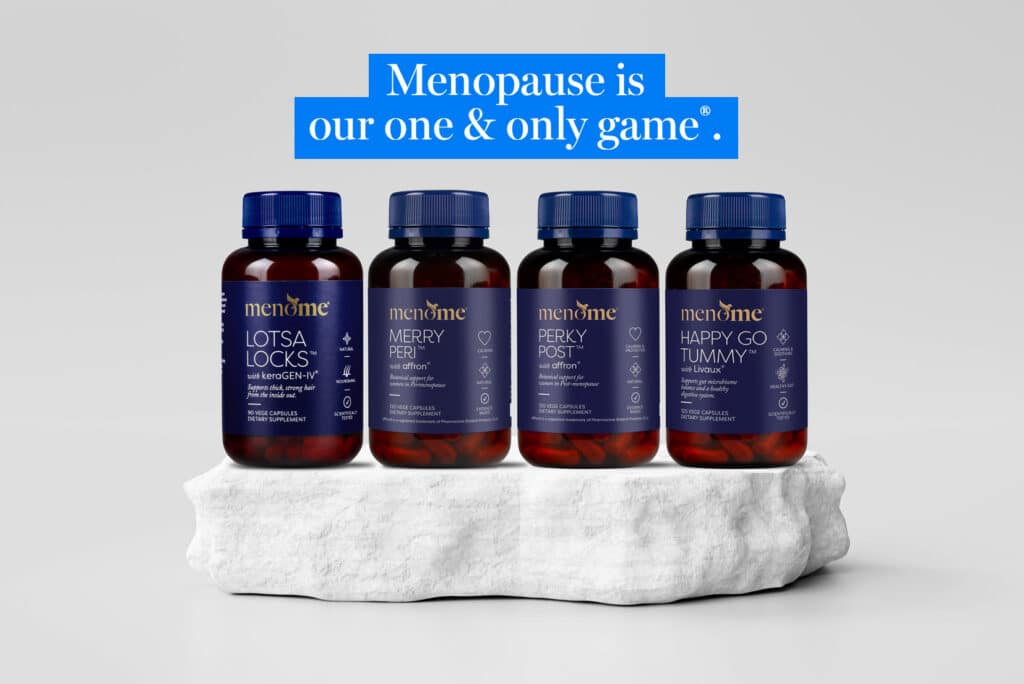
MenoMe® supplements

Evidence-based botanical support

We use high-quality, evidence-based ingredients in all of our formulations to support you. Because we’re by women for women.  

Main article photo by Valdemars Magone on Unsplash

Share with a friend

Facebook
Twitter
LinkedIn
Email

Sign up to our mailing list for the latest news and stories and receive a $5 discount code to redeem on your first purchase, plus receive a 3 step eBook on ways to support your your body through menopause.

This site is protected by reCAPTCHA and the Google Privacy Policy and Terms of Service apply.
Scroll to Top


FREE SHIPPING 🚚 

For all orders during April

Includes subscriptions and international

Use code: FREESHIP


* Ends 11:59pm 30 April, 2026 NZT

Post-menopause


This is the time when menstruation is well and truly over, the ovaries have stopped producing high levels of sex hormones and for many ladies, perimenopause symptoms subside.

Estrogen has protective qualities and the diminished levels mean organs such as your brain, heart and bones become more vulnerable. It’s also a key lubricant so your lips may become drier, your joints less supple and your vagina might be drier. In addition, your thyroid, digestion, insulin, cortisol and weight may alter.

At this juncture, a woman might experience an increase in the signs of reduced estrogen but she should have a decrease of perimenopause symptoms. That said, some women will experience symptoms like hot flushes for years or even the rest of their lives.

Perimenopause

Peri = ‘near’

Most females begin to experience the symptoms of perimenopause in their mid-forties. Your progesterone levels decline from your mid-30s but it’s generally from around 40 that the rest of your sex hormones begin to follow suit. 

Perimenopause is a different experience for every woman and some women may barely notice it. The first indicators are usually changes to the monthly cycle. This means that for some ladies, this can be accompanied by things like sore breasts, mood swings, weight gain around the belly, and fatigue as time goes on.

For those with symptoms it can be a challenging time physically, mentally and emotionally.

Importantly, perimenopause lasts – on average – four to 10 years. The transition is usually a gradual process and many women enter perimenopause without realising.