
If peri- or post-menopause weight gain has left you wondering what the heck happened to the body you thought you knew, you’re in very good company.
Perhaps you’re eating much the same way you always have. Maybe you’re exercising more. Or perhaps you’ve tried cutting portions, skipping snacks and generally being very good – only to find the scales apparently missed the memo.
So, what gives?
Menopause can change several factors involved in weight management, including body-fat distribution, muscle mass, sleep, activity, appetite and metabolic health.
Your body also adapts to weight loss and calorie restriction.
Together, these changes can help explain why losing weight in perimenopause and post-menopause can feel different from losing weight at 25 or 35.
And that brings us to the idea of your weight set point.
First things first: your body isn’t fighting with you
Weight gain feeling more difficult to manage – especially ’round the belly – during perimenopause or post-menopause doesn’t mean you’re lazy or lacking discipline.
Menopause is a significant biological transition, and it generally happens at the same time as we’re getting older. It’s the gateway to ageing.
Muscle mass can decline with age, lifestyles change, sleep may go completely AWOL (cheers, night sweats ), and fluctuating then declining estrogen can influence where fat is stored.
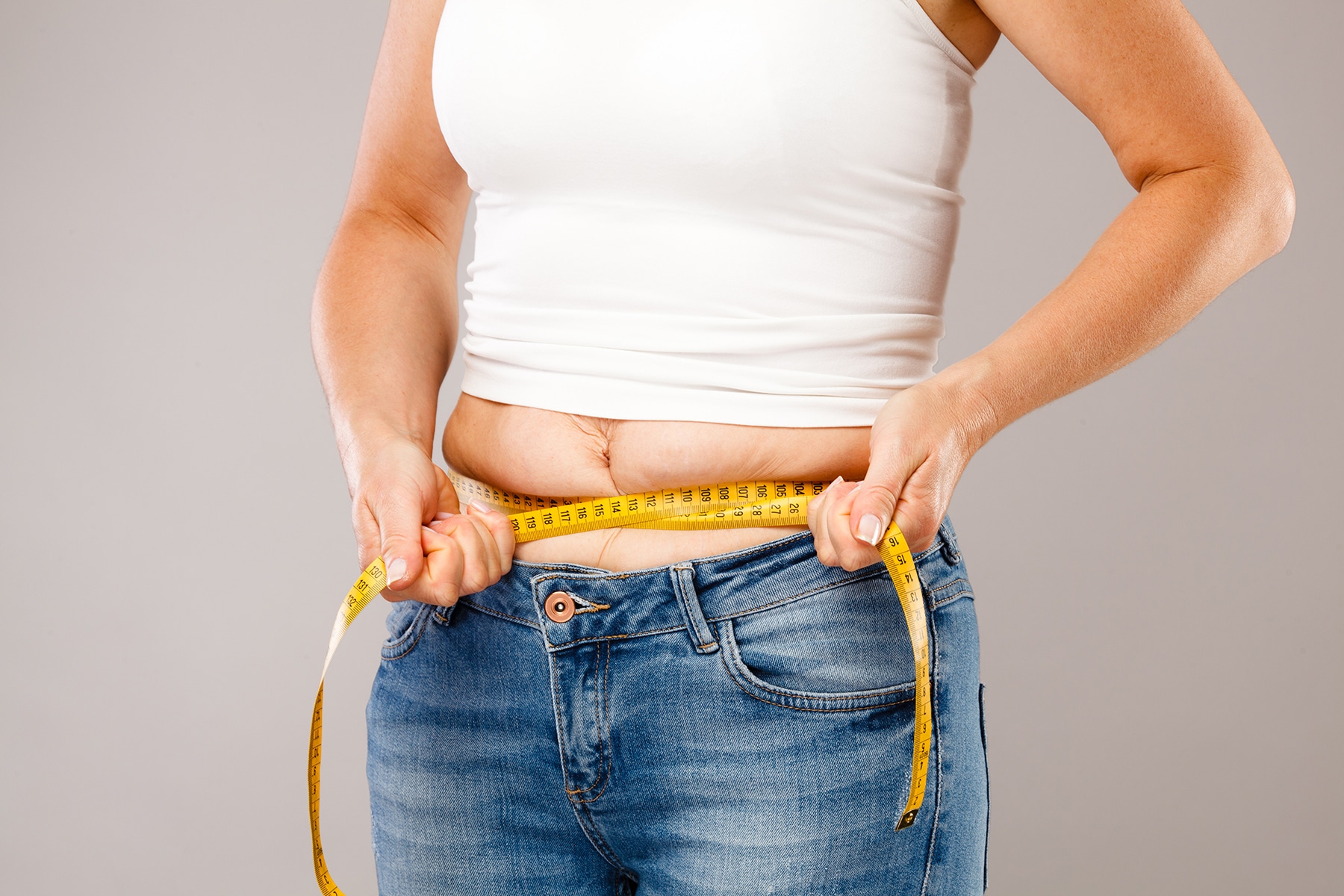
For this reason, weight gain during peri and post-menopause is common, and fat distribution tends to shift towards the belly. We’ve heard lots of you calling it meno belly.
But there’s more going on here than calories in and calories out.
Understanding that is important because it changes the conversation from toa much better question: “What does my body need at this stage of life?”
Prefer to watch? Go to YouTube here.
What is a weight set point?
Weight set point is the idea that your body and brain works to keep your weight within a familiar range. It’s a comfort zone so to speak.
Rather than your body having one number etched into stone, it’s probably more helpful to think of weight set point as sitting within a range.
Your brain is constantly processing information, and it receives intel about energy stores, food intake and the body’s needs through a complicated network involving the nervous system, hormones and messages from the gut and fat tissue.
When you lose weight, the body reacts because it’s always trying to keep you in a safe and balanced place – this is called homeostasis. It doesn’t realise you’re trying to feel good in your jeans.
This doesn’t mean weight loss is impossible or that your body has permanently “decided” what you should weigh. But it does show that body-weight regulation is far more sophisticated than simply telling someone to eat less.
The quick answer: what’s a weight set point?
A weight set point is the idea that the body biologically regulates weight within a certain range. When weight or energy from food declines (as in a strict diet), appetite and metabolism adapt in ways that resist further weight loss.
Does menopause change your weight set point?
This is where we need to separate a helpful concept from an oversimplified internet claim.
The truth is, there isn’t good evidence that menopause suddenly flips a switch and permanently “resets” your body to a higher predetermined weight.
What does happen is that menopause and ageing can change some of the systems influencing body composition* and weight regulation.
*body composition encompasses fat, muscle, bones and water.
Hormonal changes can encourage fat distribution to shift towards the belly. Growing older can contribute to loss of muscle. Sleep disruption makes healthy eating and motivation for movement harder. The same goes for less tolerance for stress. Lifestyle and activity may change. And after repeated periods of weight loss and dieting – the yo-yo effect – dieting can make weight loss more challenging.
So, it’s a bit of a complicated soup.
Why can menopause weight gain feel so stubborn?
Menopause happens at the same time as growing older, and genetics, eating patterns, activity, sleep, health conditions and medications can all influence body weight.
So there isn’t one single cause of menopause weight gain which complicates things.
That’s why the familiar “just eat less and exercise more” advice can feel frustratingly inadequate.
The balance between the energy you eat and the energy your body uses is still key. But sleep, stress, hunger, hormones, and metabolism can influence both sides of that equation .
Hormones and meno belly
One of the most noticeable body changes around perimenopause and post-menopause can be a thicker waist and belly fat or meno belly.
It’s our old friend biology.
As estrogen levels change, fat distribution tends to shift away from the hips and thighs and towards the belly. Menopause-related changes and growing older can therefore alter body composition even when the number on the scales doesn’t change.
Abdominal fat is metabolically important because a larger waist can indicate visceral fat. This type of fat sits deeper in the abdomen, around your organs. During and after menopause, your risk of metabolic syndrome also increases. This is a group of health issues that occur together, including a larger belly, high blood pressure, raised blood sugar, high triglycerides and low HDL (“good”) cholesterol. Having several of these increases your risk of type 2 diabetes, heart disease and stroke.
This makes weight management – and looking after your metabolic and heart health – even more important after menopause. It may not be the most thrilling or fun thing you discover today, but it’s valuable knowledge. Awareness helps you take stock and make smart choices for the long haul.
To be clear, this doesn’t mean declining estrogen is solely responsible for every extra kilo. It means hormones are part of the picture, alongside age, genetics, food intake, sleep, stress, physical activity, muscle, medications, and other health factors including thyroid issues.
Metabolic adaptation: your body’s energy-saving response
If you’re focused on getting a handle on your weight, here’s a phrase to remember: metabolic adaptation, sometimes called adaptive thermogenesis. Yep, it’s a mouthful.
Here’s what it means: during weight loss, your body becomes smaller, so it naturally requires less energy to fuel it.
But research also shows that energy use can sometimes decrease by more than would be expected from changes in body mass and body composition alone.
In plain English?
Your body may learn to manage on fewer calories as you lose weight
At the same time, appetite can increase. Not helpful when you’re trying to lose weight.
Again, it’s biology, and it goes in part to explaining weight-loss plateaus and rebound weight.
Why the “eat less, move more” advice can backfire
Let’s clear something up: to lose body fat, an energy deficit or less calories/kilojoules is generally required.
We’re not going to pretend calories have ceased to exist because menopause arrived.
But how that deficit is created and whether it can be sustained matters enormously.
Very restrictive diets can be difficult to maintain. They may leave you hungry, tired and thinking about food 24/7.
And, as we mentioned above, weight loss itself triggers biological adaptations that can encourage hunger and reduced use of energy.
For some women, dieting can also create a familiar cycle:
Restrict → get ravenously hungry → overeat/binge → feel guilty → restrict again.
Sound familiar?
A more sustainable approach is to build an eating strategy that provides adequate nutrition including protein, fibre, fats and smart carbs. One that’s satisfying enough to live with, dials down inflammation and works alongside sleep, movement, resistance training, and recovery time.
Muscle is important during menopause
Muscle supports strength, mobility, physicality, metabolic health and glucose metabolism.
Age-related loss of muscle mass and strength becomes important as we get older, which is why resistance and weight-bearing exercise are so often recommended as part of healthy ageing and menopause these days.
As well as protein – you probably haven’t miss all the chatter in the world about both of these.
And it is true that eating enough protein as part of a balanced diet provides the amino acids required to maintain and build muscle, particularly when paired with resistance exercise.
However, the type of protein and the amount of protein, the resistance training and your body type matter too. If they’re too much for you, they may cause you to gain weight.

What about blood sugar and appetite during menopause?
Blood glucose regulation and insulin sensitivity can change with age and during the menopause transition.
Food can be supportive – or not. Combining protein, fibre, healthy fats and smart carbs – rather than eating any one of them “naked” – can help keep blood sugar on a more even keel.
Rather than chasing “perfect” blood sugar or demonising carbohydrates, focus on the combination as well as an overall pattern:
- lean protein every time you eat
- fibre-rich vegetables and fruit
- legumes
- whole grains
- nuts and seeds
- healthy fats such as extra virgin olive oil
- fewer highly processed food
The muscle we talked about above matters too, because muscle helps take glucose out of the bloodstream and use it for energy.
Simple? Yep.
Always effortless? Nope.
Sleep – or lack of it – impacts weight
Sleep deserves a bit of a loudspeaker in the meno metabolism conversation.
Peri- and post-menopause often bring sleep problems, and night sweats can make matters worse. True story.
When you’re exhausted, everything feels hard. We all know this one, don’t we?
Research outside menopause specifically also links inadequate sleep with changes in appetite and metabolism. That doesn’t mean “sleep more and the weight will fall off”.
Wouldn’t that be nice?
But it does mean sleep is one part of the weight puzzle and deserves as much attention as food and movement.
What about stress?
Stress is another aspect that deserves a headline.
Although cortisol doesn’t automatically equal belly fat, and blaming every kg on “high cortisol” oversimplifies a complicated system.
Stress can affect behaviour, appetite, sleep, recovery and our fat levels.
So stress management isn’t a magical fat-loss hack, but it is part of looking after the whole woman.
Walking, getting outside, relaxation practices, social connection and creating realistic expectations all help.
Can you reset your weight set point?
To be clear: there is currently no proven diet, food, supplement, medication or short-term programme that can reset a human weight set point on command.
That’s important.
“Set point reset” is a way to talk about moving away from repeated restriction and supporting healthier weight-regulating behaviours, but it shouldn’t be mistaken for a guaranteed physiological reset.
But sustainable changes to weight, body composition, eating habits, fitness and strength, and your relationship with food maintained over time can absolutely influence body weight and metabolic health.
So what should you do when menopause weight won’t budge?
Rather than immediately cutting more food, zoom out.
1. Build meals around protein
Include a protein source each time you eat. Depending on your preferences, that might include Greek yoghurt, tofu, tempeh, beans, lentils, fish, chicken, cottage cheese, lean meat occasionally, eggs in moderation or other protein-rich foods.
2. Give fibre some love
Vegetables, fruit, whole grains, legumes, nuts and seeds provide fibre as well as vitamins, minerals and plant compounds. Your gut loves it too.
3. Don’t shy away from healthy fats
Extra virgin olive oil, avocado, nuts, seeds and oily fish can all form part of a menopause eating pattern.
4. Prioritise strength, not just calorie burning
Walking is wonderful. Keep walking, but consider adding resistance exercise if you can.
Strength training helps maintain muscle and bone health, both of which become increasingly important from perimenopause through post-menopause.
5. Move outside your workouts
Formal exercise is only part of daily movement. Walking to the shops, taking the stairs, gardening, cleaning, standing and generally pottering around all contribute to daily energy expenditure.
That everyday movement has a scientific name – non-exercise activity thermogenesis, or NEAT.
Click here for What The Heck Is Neat?
6. Treat sleep as your Queen
If you’re consistently sleeping poorly, don’t demand more willpower from yourself the following day.
Look at your sleep routine and, importantly, try to add menopause signs or symptoms that may be keeping you awake.
Download our free Sleep Hygiene Sheet here
7. Stop looking for the fastest possible result
Fast weight loss makes for excellent advertising, but sustainable behaviour makes for a much better life.
The goal is to create an approach you can continue after the initial burst of motivation and Tuesday night is cold, you’re tired and someone has ordered pizza.
That’s reality.

The Shake It Off® approach: support, don’t punish
The Shake It Off® System was never intended to be another ‘diet’.
Our approach is about creating sustainable habits around food, movement and lifestyle specifically for perimenopause and post-menopause. Supported by the evidence-based power of Shake It Off® and Happy Go Tummy® capsules.
That means prioritising nourishing foods, protein, fibre, healthy fats and smart carbs; supporting muscle; moving regularly; paying attention to sleep and stress levels; and stepping away from an all-or-nothing mentality.
Frequently asked questions about menopause weight gain and set point
Why am I gaining weight during menopause when I’m eating the same?
Menopause occurs alongside ageing, and both can affect body composition. Muscle may decline, daily activity can change and hormonal changes can shift fat storage towards the belly. Sleep, stress, genetics, medications, health conditions and eating patterns can also contribute.
Does menopause slow your metabolism?
Metabolism can change with age, particularly as body composition and muscle mass change. Menopause itself shouldn’t be treated as an on/off switch that suddenly “breaks” metabolism. Age, muscle, resting metabolism, activity, body size and type, diet and other factors all influence daily energy expenditure.
Why does menopause cause belly fat?
Hormonal changes associated with menopause can influence fat distribution, making abdominal fat more likely. Ageing, lifestyle, sleep, stress, genetics, activity, diet, and overall metabolism and metabolic health also count.
Can eating too little stop weight loss?
While eating less can support weight loss, eating far too little often backfires. It can make you hungrier, lower the amount of energy your body uses and be difficult to maintain. You may also lose muscle, which isn’t helpful for your strength, metabolism, mobility or long-term health.
Is metabolic adaptation permanent?
Not necessarily. Metabolic adaptation is a biological response to weight loss and energy restriction, and its size and persistence vary between on the person. It shouldn’t automatically be interpreted as permanent “metabolic damage”.
Can I reset my metabolism during menopause?
There is no scientifically established “metabolism reset” button. But you can support metabolic health by maintaining muscle, being physically active, eating a balanced and nourishing diet, sleeping well, dialing down stress and addressing any health issues with your healthcare professional.
Can you reset your weight set point?
No specific food, supplement, medication or programme has been proven to simply reset a person’s weight set point. It’s better understood as a biological weight regulation system than a fixed number you can manually reprogramme.
What is the best way to lose weight during menopause?
There’s no single menopause weight-loss plan that works for everyone. A sustainable approach generally combines a nutrient-dense eating strategy, an appropriate energy intake, adequate protein, fibre, healthy fats, smart carbs, regular movement, resistance exercise and focus on sleep and stress. And that’s exactly why we created Shake It Off®.
The bottom line
If menopause weight gain feels different than it did when you were yunger, there’s a good reason: your body has changed.
Hormonal changes can alter fat distribution, and ageing may impact muscle and energy needs. Plus poor sleep and less tolerance for stress can make healthy behaviours harder. And weight loss itself can trigger biological shifts that make continued loss more difficult or regained weight more common.
But none of this means change is impossible, bu the solution needs to be smarter.
Instead of deprivation, focus on: nourishing food, adequate protein, fibre, healthy fat, low GI carbs, muscle-building movement, everyday activity, sleep, dialled-down stress and sustainable habits.
Health note: This article provides general educational information and is not a substitute for personalised medical or dietetic advice. Unexplained or rapid weight changes, significant fatigue, or other concerning signs should be discussed with a qualified healthcare professional.
We focus on everyday principles: protein, healthy fats, fibre and smart carbs within a Mediterranean-style, plant-forward way of eating. We’re menopause and weight-loss coaches, not nutritionists or personal trainers, so we don’t prescribe individual meal plans or exercise programmes.

Just so you know: this article is written by Jenna Moore, a real person who has studied the physiology of menopause and women’s healthy ageing.
I sometimes use AI as an assistant. It can pass me the pencils and help organise the research, but it never does the research or gets the final word. You also won’t find its favourite words repeated throughout – such as “actually”, “genuinely”, “quietly”.
AI will never take the place of expertise, lived experience or authentic writing.
Sources & further reading
- NHS – Menopause and perimenopause: symptoms
https://www.nhs.uk/conditions/menopause-and-perimenopause/symptoms/ - NHS – Things you can do to help with menopause and perimenopause
https://www.nhs.uk/conditions/menopause-and-perimenopause/things-you-can-do/ - Mayo Clinic – The reality of menopause weight gain
https://www.mayoclinic.org/healthy-lifestyle/womens-health/in-depth/menopause-weight-gain/art-20046058International Journal of - Obesity – Metabolic adaptation is not a major barrier to weight-loss maintenance
https://pmc.ncbi.nlm.nih.gov/articles/PMC7458773/ - Obesity Reviews — Adaptive thermogenesis in humans
https://pubmed.ncbi.nlm.nih.gov/20935667/