
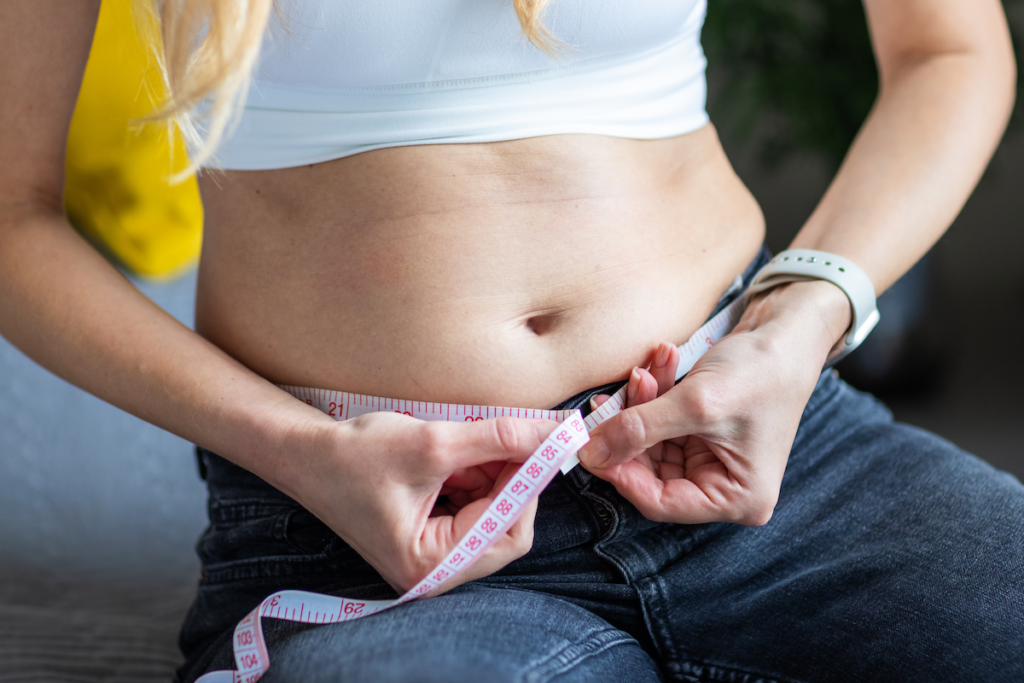
Let’s talk about menopause belly fat, or meno belly. Has your tummy changed even though you haven’t made any major changes to how you eat or move?
Your waistband feels tighter. Clothes sit differently. The habits that used to keep your weight fairly even don’t seem to be working anymore. We hear you.
Weight gain around the middle – which a lot of you call meno belly – is a common annoyance from perimenopause to post-menopause.
And it isn’t simply a case of eating too much or moving too little. Menopause can change where your body prefers to store fat, while ageing, muscle loss, sleep, stress, blood sugar and dieting history can all join the conversation.
The good news is that belly fat responds super well to the everyday foundations we focus on with the Shake It Off® capsules + System. But first, it helps to understand what’s going on.
Prefer to watch? Watch Menopause Belly Fat: What Changes & What Helps on YouTube
Why does belly fat increase during menopause?
Meno belly usually develops through a combination of hormonal shifts and ageing, so the blame doesn’t lie solely at the feet of menopause. But as estrogen declines, fat distribution can shift away from the hips and thighs and towards the abdomen. And research does suggest the menopause transition is linked to increased total body fat and central fat, even though growing older also plays a role.
At this time of life, you’re probably also losing muscle – a big driver of metabolism. Muscle is metabolic tissue: it helps you use glucose [blood sugar] after meals, supports strength and mobility and contributes to how much energy your body uses even when it’s at rest. From around 40 onwards, maintaining it becomes increasingly important.
Add interrupted sleep, ongoing stress, less everyday movement overall and a body that may respond differently to refined carbs and sugars than it did 15 years ago. No single one of these automatically causes weight gain. Together, however, they can make belly fat easier to gain and harder to shift.
Is menopause belly fat different from other body fat?
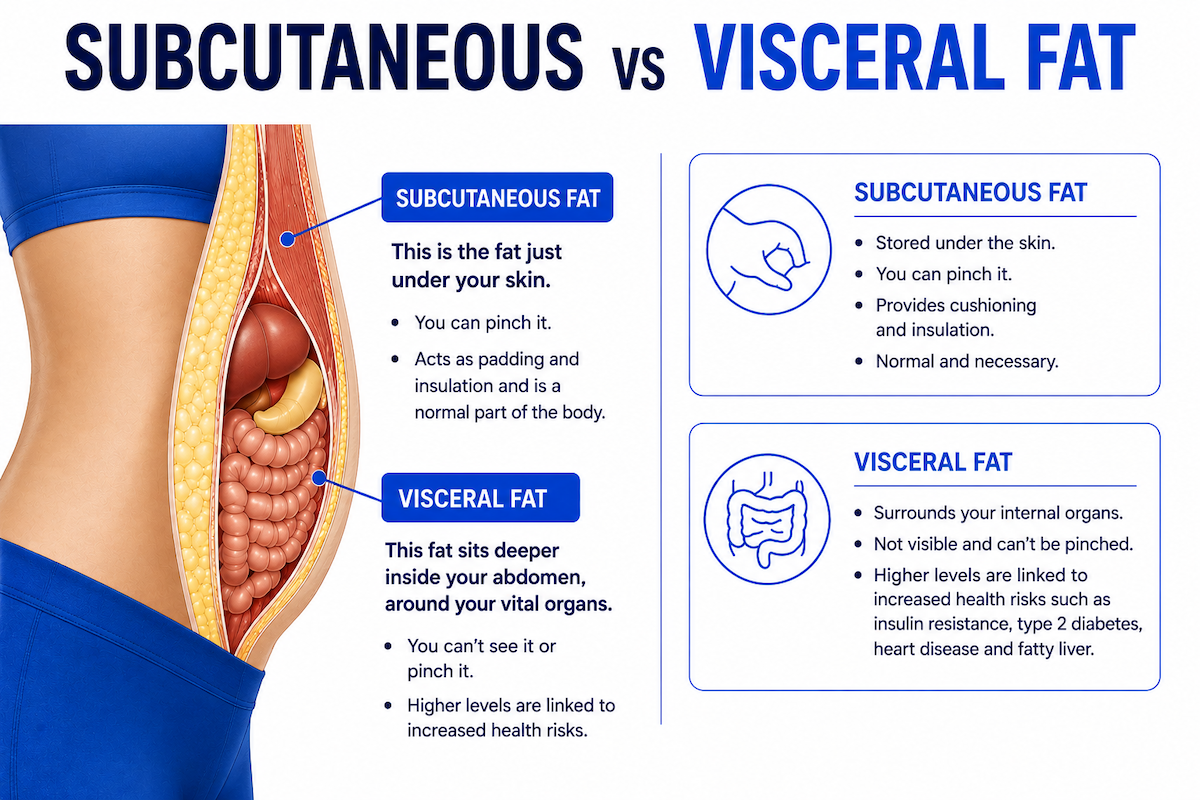
Not all body fat is stored in the same place, and location makes a difference. The two types it’s helpful to understand are subcutaneous fat and visceral fat.
Subcutaneous fat
Subcutaneous fat is the softer fat that sits just under your skin – the kind you can pinch. It’s usually stored around your hips, bottom, thighs, arms and belly.
During your reproductive years, estrogen tends to favour more fat storage around the hips and thighs. As estrogen changes through menopause, that distribution can shift towards the middle.
Visceral fat
Visceral fat sits deeper inside your abdomen, around your internal organs. You can’t identify it simply by pinching your stomach, and bathroom scales can’t tell you exactly where your fat is stored.
Higher levels of visceral fat are linked with metabolic syndrome, which encompasses insulin resistance, type 2 diabetes, fatty liver disease, raised blood pressure and cardiovascular risk. That doesn’t make a changing waist a diagnosis or reason to go into panic mode. But it does make waist size a consideration alongside blood pressure, blood glucose, cholesterol, strength, fitness and your overall health picture.
What are white, brown and beige fat?
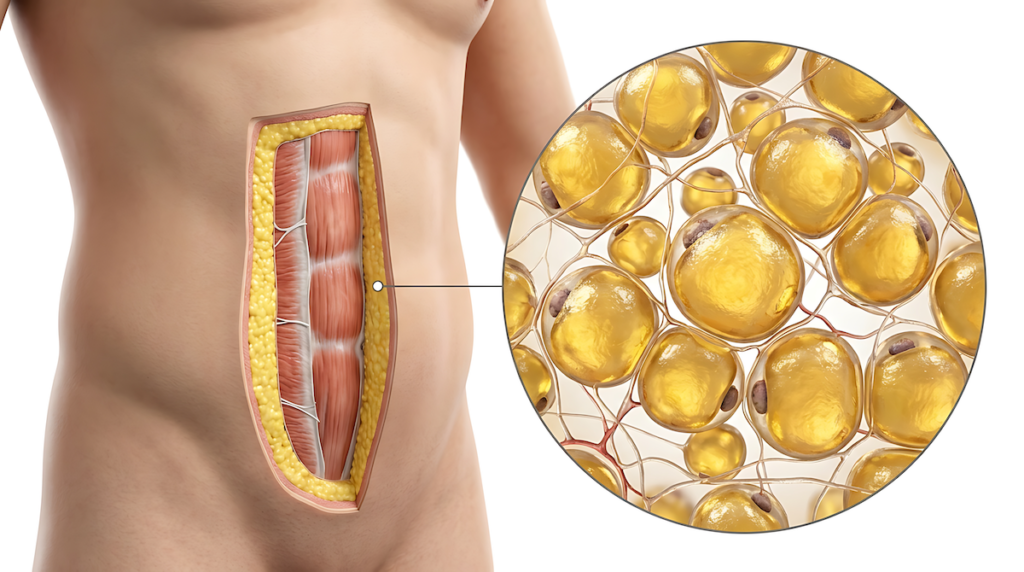
It’s amazing to realise that fat is biologically active tissue, not simply padding or spare energy tucked away for later. You may or may not have heard it described as white, brown or beige fat. And they’re quite different.
White fat stores energy
Most adult body fat is white fat. It stores energy (or calories), cushions organs and produces hormones and signalling molecules. White fat is also hormonally active and contains estrogen receptors. Some environmental chemicals known as endocrine-disrupting chemicals can interfere with estrogen signalling, while certain fat-soluble pollutants can accumulate in fat tissue. These exposures can come from our food, environment and from some personal care products. White fat isn’t automatically ‘bad’; we need it. Problems are more likely when there’s an excess, especially around the organs.
Brown fat produces heat
Brown fat behaves very differently from white fat. While white fat mainly stores excess energy as fat for later, brown fat is metabolically active and actually burns calories to produce heat. Adults only have relatively small amounts, mainly around the neck and collarbones, and it tends to become less active as we age.
Beige fat can behave more like brown fat
Beige fat refers to cells within white fat that can take on some brown-fat-like characteristics. This is potentially a good thing because they become more metabolically active and burn more calories to produce heat rather than storing them. This process is sometimes called browning. It’s interesting science
Cold exposure, exercise and certain food compounds have all been studied for their ability to encourage this process. But the evidence isn’t convincing yet that a person can deliberately create enough beige fat to produce lasting weight loss.
But exercise is particularly interesting because animal research shows it can encourage browning, and some human studies have found signs of this too. Human evidence is still mixed, so we can’t say that exercise simply turns white fat into brown fat.
What we do know is that exercise supports muscle, insulin sensitivity and metabolic health – and may also encourage healthier activity within fat tissue. So you don’t need to make ice baths or large quantities of chilli your menopause weight strategy (unless you want to!).
What else drives meno belly fat?
Poor sleep
Broken sleep can change appetite, cravings, food choices and how energetic you feel the following day. Have you noticed it’s much harder to plan a healthy lunch or lift weights when you’ve been awake since 3am? Yep!
Stress and cortisol
Cortisol is essential – it helps you respond to challenges and get up and going in the morning. But ongoing stress can affect sleep, appetite, blood sugar and where fat is stored. But stress-free lives are not really realistic, so the goal isn’t perfection. It’s giving your body regular periods of recovery rather than staying switched on all day.
Blood sugar and insulin resistance
To put it simply, insulin helps move glucose, aka blood sugar, from your bloodstream into your cells to be used for fuel. When your cells become less responsive to insulin, your body needs to produce more. Menopause, growing older, reduced muscle, sleep loss and belly fat can all influence how sensitive we are to insulin.
This doesn’t mean carbohydrates are forbidden, but it’s best to avoid refined sugars and carbs because they spike blood sugar for longer. And it does mean meal structure is important: protein, plants, fibre-rich, smart, slow-burning carbohydrates and healthy fats generally produce a steadier blood sugar response.
Muscle loss
Muscle loss can make weight management more tricky and healthy ageing less robust. Strength training and adequate protein help preserve and build muscle. They also support balance, flexibility, bones, independence (getting up from the toilet) and the helpful ability to carry all your shopping in one trip.
Years of restrictive dieting
If you’ve spent years eating as little as possible, your body may have adapted by conserving calories (energy) and stronger hunger or cravings. The answer isn’t another strict diet. It’s a sustainable, consistent approach that includes crowding out refined and processed stuff with whole foods.
How do you measure menopause belly fat at home?
You can’t directly measure visceral fat at home, but waist circumference and waist-to-height ratio can be helpful indicators of where you’re storing fat.
How to measure your waist
- Stand relaxed with your feet together.
- Find the bottom of your ribs and the top of your hips.
- Place the tape halfway between those two points – often just above the belly button.
- Keep the tape level and comfortably close to your skin without pulling it tight.
- Breathe out normally, then take the measurement.
Measure under similar conditions each time rather than checking every day – bodies fluctuate.
Calculate your waist-to-height ratio
Use the same unit for both measurements, then divide your waist by your height. For example, an 80 cm waist divided by a height of 165 cm gives a ratio of 0.48.
Current NICE guidance uses these ranges for adults with a BMI below 35:
- 4 to 0.49: no increased central-adiposity health risk
- 5 to 0.59: increased risk
- 6 or above: further increased risk
The easiest version to remember is: aim to keep your waist below half your height.
This is one health marker – not a measure of how attractive you are. If your waist changes rapidly, your result concerns you or you have other health symptoms, speak with your healthcare professional.

Can you lose menopause belly fat?
The news I know you want to hear is a resounding yes. Belly fat can dial down, but you can’t choose where your body loses fat first. Hundreds of sit-ups may strengthen your abdominal muscles; they won’t remove the fat above them.
A better approach is to improve things like appetite, muscle, blood sugar and overall fat loss, consistently. It’s about progress, not perfection.
1. Make protein a regular feature
A good rule of thumb is to include protein every time you eat. Eggs, fish, chicken, lean meat, tofu, tempeh, legumes, Greek yoghurt, quinoa, buckwheat, and cottage cheese are all options. Protein supports muscle and helps meals feel satisfying.
And for snacks, things like an apple with peanut butter, or a few almonds and an orange work too.
2. Let plants do more work
Vegetables, fruit, legumes like beans, lentils, chickpeas and edamame, whole grains, nuts and seeds provide fibre and polyphenols that support your gut and metabolic health. Variety and consistency win.
3. Strength-train
Aim to challenge your major muscle groups regularly at a level that suits your body and experience. Bodyweight exercises, resistance bands, machines and free weights all count. Progress gradually; soreness isn’t Queen.
4. Move throughout the day
Planned exercise is good, but so is everyday movement. Walk, garden, take the stairs, stand up between tasks and try a short walk after meals when you can. Small amounts accumulate beautifully.
5. Give sleep a proper place
Keep a reasonably regular wake time, get outdoor light early in the day without sunnies, and leave some time between dinner and bed. About three to four hours seems to be a good rule of thumb. If sleep apnoea, restless legs or insomnia are disrupting your zzzz’s, getting the cause assessed might be more helpful than buying another lavender spray.
6. Support steadier blood sugar
Build meals around protein and plants, choose fibre-rich, smart carbohydrates and avoid leaving yourself so hungry – go for 80% full.
7. Look honestly at alcohol
Your liver prioritises processing alcohol, so breaking down fat temporarily takes a back seat. Alcohol can also affect sleep, appetite and food choices – munchies anyone? One drink hasn’t undone your week, but how much and how often can make a difference.
8. Allow enough time
The habits that support belly fat loss aren’t rocket science, but they work together: protein, fibre, movement, sleep, strength and repetition. Judge progress over months.
A kinder, smarter way to approach your belly
Menopause belly fat, meno belly, meno pot, or whatever you like to call it isn’t evidence that you’ve become lazy. Hormonal shifts alter fat distribution, and the rest of perimenopause and beyond – sleep, stress, muscle, blood sugar, movement and years of dieting – can make changes more noticeable.
There’s no single food, supplement or exercise that removes abdominal fat on command. There is, however, a very helpful collection of daily choices that improve the environment for your body.
That’s what the Shake It Off® and Happy Go Tummy® capsules + System are designed to help you build. Your plate’s your secret weapon, with muscle, movement, sleep and stress support firmly in the support crew.
Download our free MenoMe® Waist Circumference Measurement Guide to measure your waist here.
And if you want to understand why your weight may feel stuck, watch Has Menopause Changed Your Weight Set Point? on the MenoMe® YouTube channel here
Frequently asked questions about menopause belly fat
Does menopause directly cause belly fat?
Menopause can change fat distribution towards the belly as estrogen declines. Ageing, muscle loss, sleep, stress, blood sugar, movement and eating patterns also influence whether total body fat increases.
Why is my stomach getting bigger but my weight is the same?
Your body composition (a mix of fat, muscle, bone and water weight), and fat distribution can change without a large impact on the scales. Less muscle and more belly fat may alter your shape even when your total weight remains similar. Bloating can also change your waist temporarily and has different causes from body fat – one reason we include Happy Go Tummy® in the overall system as a supporter.
What’s the difference between bloating and menopause belly fat or meno belly?
Bloating often changes across the day and may feel tight, full or uncomfortable, and it can be linked with gut health (although not always). Body fat changes more gradually. Persistent or painful bloating, a sudden increase in abdominal size, early fullness or changes in bowel habits should be checked by your healthcare professional.
What is the best exercise for menopause belly fat?
There isn’t one best exercise. A combination of strength training, aerobic activity and regular everyday movement supports muscle, fitness, insulin sensitivity and overall fat loss. Choose activities you like because this usually means you’ll do them consistently.
Can walking reduce menopause belly fat?
Walking can contribute to overall activity, fitness, blood sugar management and an energy deficit, all of which may support fat loss. It works best alongside strength training, nourishing meals and adequate sleep.
Do I need to cut carbohydrates to lose belly fat?
Not necessarily. Fibre-rich, slow-burning carbohydrates can be part of a balanced menopause diet. And we absolutely include them in the Shake It Off® System. Portion, type and what you eat them with matter. Combining carbohydrates with protein, plants and healthy fats can help you feel fuller for longer and encourage steadier blood sugar.
Prefer to watch? Watch Menopause Belly Fat: What Changes & What Helps on YouTube
Disclaimer: This article should never take the place of medical advice, please see your GP.

Just so you know: this article is written by Jenna Moore, a real person who has studied the physiology of menopause and women’s healthy ageing.
I sometimes use AI as an assistant. It can pass me the pencils and help organise the research, but it never does the research or gets the final word. You also won’t find its favourite words repeated throughout – such as “actually”, “genuinely”, “quietly”.
AI will never take the place of expertise, lived experience or authentic writing.
Resources
NICE. Overweight and obesity management: identifying and assessing overweight, obesity and central adiposity. Updated 2026. https://www.nice.org.uk/guidance/ng246/chapter/Identifying-and-assessing-overweight-obesity-and-central-adiposity
Ambikairajah A, Walsh E, Tabatabaei-Jafari H, Cherbuin N. Fat mass changes during menopause: a meta-analysis. American Journal of Obstetrics and Gynecology. 2019. https://pubmed.ncbi.nlm.nih.gov/31034807/
Barquissau V, et al. Human white-fat thermogenesis and browning: experimental and meta-analytic findings. 2021. https://pubmed.ncbi.nlm.nih.gov/33553504/