Perimenopause And Post-Menopause: the 8 most common questions we’re asked
We get a lot of questions about perimenopause and post-menopause. Some whispered, some panicked, some sent at 2 am.
So we’ve pulled together eight of the ones we’re asked most often, with clear, honest answers.
1. What’s the difference between perimenopause, menopause and post-menopause?
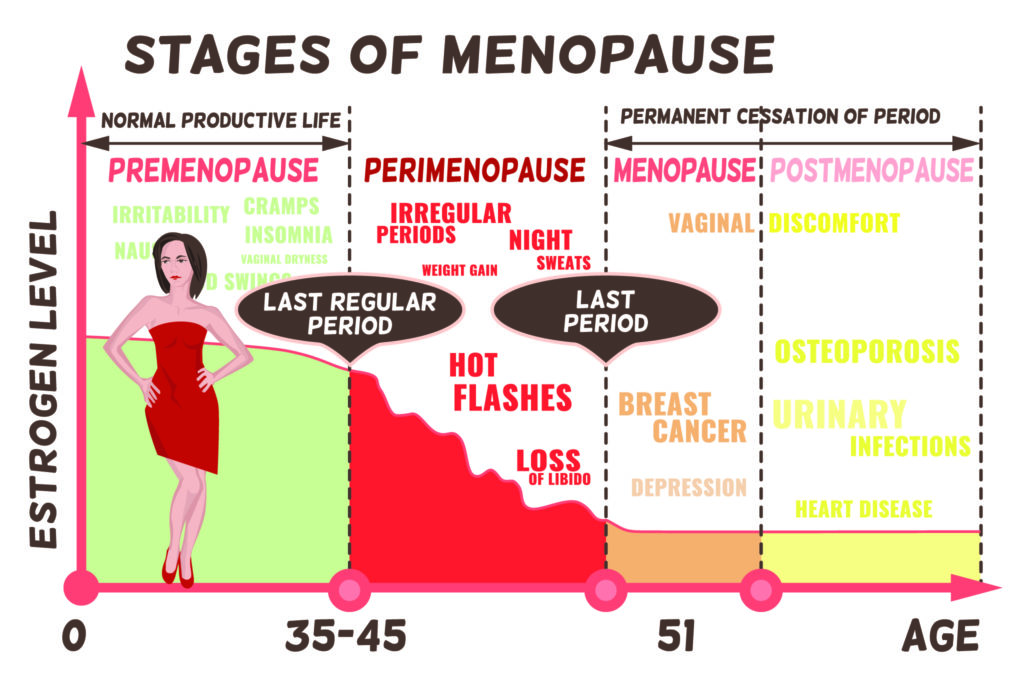
Most people, including many doctors, use “menopause” as an umbrella term. But technically, it’s just one moment in a much longer story.
Perimenopause is the lead-up. It’s when hormones begin to shift, and signs and symptoms can start. This can begin as early as your late 30s and last anywhere from a few years to over a decade.
You can still fall pregnant during this time, although it’s less likely.
Menopause itself is defined as one full year without a period. That’s it. A moment you only recognise in hindsight.
Which means by the time you know you’re there, you’re already in post-menopause.
That’s why at MenoMe®, we focus more on peri and post-menopause. That’s where most of the real-life experience sits.
2. I’m itchy all over. Is this a sign of perimenopause?
Yes, it can be. And it’s not exactly subtle.
Hormonal changes can affect the skin, leaving it dry, sensitive, and at times maddeningly itchy.
This can include:
arms and legs
scalp
And yep, sorry to say, vaginal dryness and itchiness
Some women find relief with natural options like fractionated coconut oil or products like Sylk Natural.
It’s also worth looking at the basics:
drink plenty of water (your skin will thank you)
eat water-rich foods like cucumber and watermelon
add a squeeze of lemon and a pinch of sea salt for minerals (your liver loves the liminoids)

3. I’m having dizzy spells. Should I be worried?
Dizziness can feel unsettling. Sometimes downright scary.
It’s also something many women experience during the menopause transition.
It’s not fully understood, but hormonal fluctuations are thought to play a role.
If it’s happening to you, you’re not the only one. But if it’s persistent or severe, it’s always worth getting checked.
Related: Dizziness At Perimenopause Is Common
4. My sex drive has disappeared. What can I do?
This one comes up a lot.
Hormonal changes, vaginal dryness, poor sleep, stress, it’s not exactly a recipe for feeling in the mood.
Your body’s going through quite a shift.
Things that can help:
addressing vaginal dryness
supporting hormones
open conversations with your partner (the unsexy but necessary bit)
Also worth noting, things like incontinence can play into this, too, which doesn’t help confidence.
Related: A Heartfelt Letter To My Male Partner

5. I’ve suddenly developed anxiety or a fear of driving. Is this normal?
We hear this one more than you’d think.
For some women, anxiety shows up in very specific ways:
driving
supermarkets
social situations
Sometimes it builds into panic.
One simple tool that can help in the moment is breathing:
in for 4, hold for 7, exhale for 8, and repeat until your body settles.
It sounds basic, but it works.
Related: 5 Things You Can Do If A Panic Attack Strikes
6. Why am I so bloated and craving everything?
Bloating is one of the least glamorous parts of midlife.
Hormonal changes can affect digestion, which can leave you feeling uncomfortable, heavy, or just not yourself.
A few things that can support your gut:
water (always your first port of call)
prebiotic and probiotic foods
fermented foods like kimchi, kefir yoghurt, sauerkraut
reducing ultra-processed foods and sugars
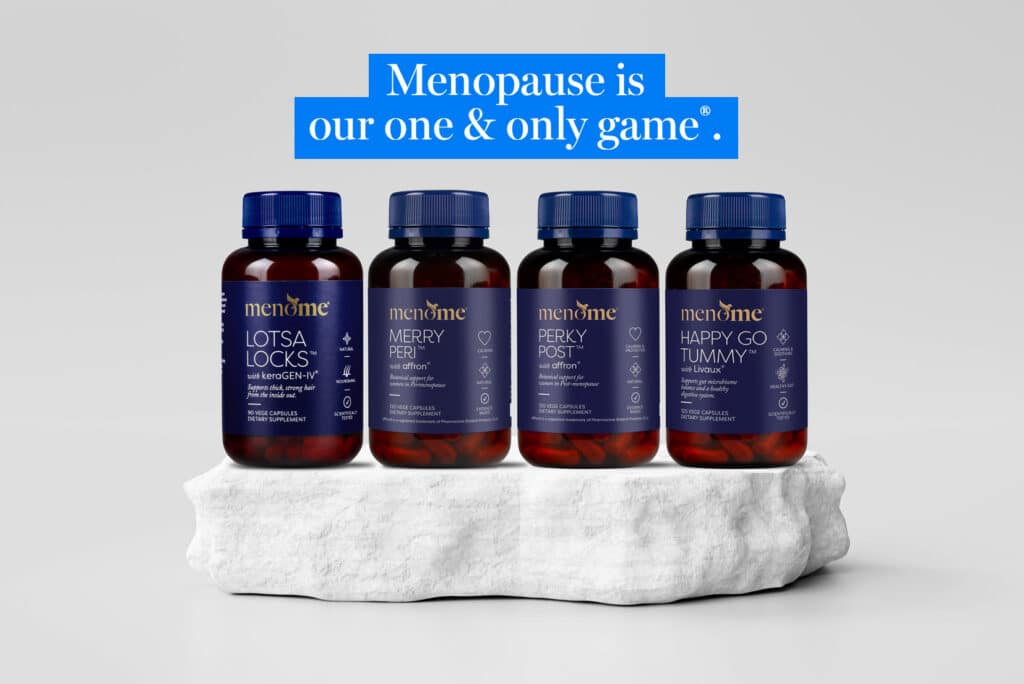
And our Happy Go Tummy® is designed to support the perplexities of the gut, and many women swear by it.
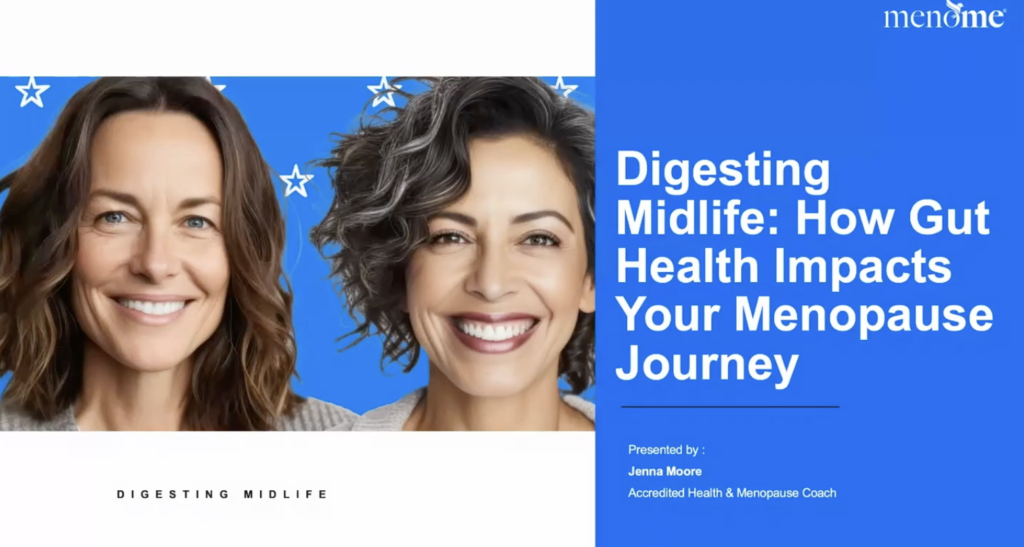
Watch: How Gut Health Impacts Your Menopause Journey
7. Can I take MenoMe® products if I’ve had breast cancer?
This is an important one.
Our formulations include ingredients like saffron, fenugreek, sage, resveratrol, vitamin D3 and K2, all of which have a long history of use.
However, this specific combination hasn’t been studied in the context of hormone-sensitive cancers.
So our advice is always the same:
please speak with your medical professional before taking anything new.
8. Will MenoMe® products help me lose weight?
Weight gain in midlife can feel frustrating. Especially around the middle.
Hormones, ageing, and digestion, stress, your gut and liver all play a role.
Our products aren’t designed specifically for weight loss.
However:
Merry Peri® and Perky Post® support hormonal balance
Happy Go Tummy® supports gut health
And when those systems are working better, managing weight can feel more doable.
At the end of the day, understanding what’s happening in your body makes everything feel a little less random.
If you haven’t already read it: Think Menopause Is All About Estrogen? Think Again is a good place to start.
Or pour yourself a cuppa, settle in, and watch Menopause: A Conversation We All Need
Final word
If you have a question you don’t see here, send it through here.
Chances are, someone else is wondering the same thing.
Disclaimer
This article is intended as a general guide and is not a substitute for personalised medical advice. If you need further support, please consult a qualified health professional.
Just so you know: this article is written by a real person who has studied the physiology of menopause and women’s healthy ageing. While we may use AI as an assistant, the research, insights and heart behind every piece comes from us.