Originally published in 2017. Updated September 23 2026.
Sugar and menopause: hormones & weight gain
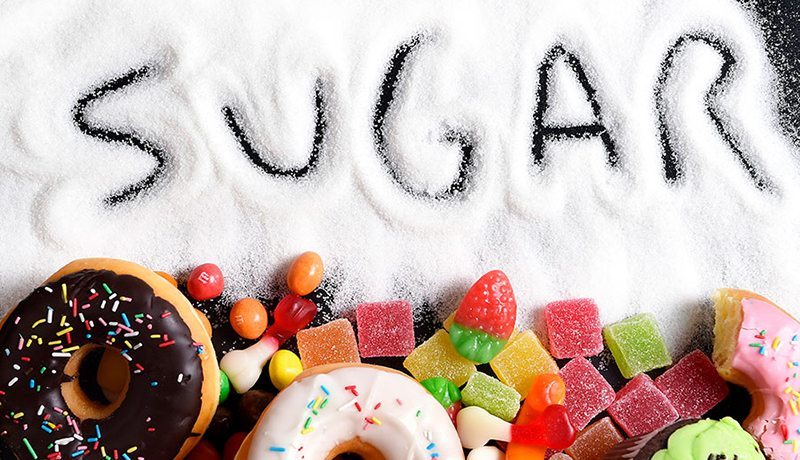
When it comes to your weight and your hormones sugar is not–so–sweet.
Dealing with midlife weight gain takes many forms. Indeed, it’s something most of us battle with (find out the reasons why here).
As you may have read, I’m a fan of Intermittent Fasting, but I always add the caveat that it’s not for everyone.
Another habit that works for me is minimising sugar. Especially the refined variety, and embracing a more holistic way of eating.
What’s more, this is great not only for managing your weight but also for balancing your mood swings.
The truth is sugar doesn’t help you reduce fat, and it’s linked to many diseases such as Type 2 diabetes, cancer, and heart disease.
Look out for part two in The Sugar Series for 10 ways eliminating sugar can improve your life.
The other thing sugar does is play havoc with your hormones.
In addition, it may trigger hot flushes and mood swings, along with insulin resistance, which leads to abdominal weight gain.
How blood sugar fluctuations work:
 So let’s say you have a glass of orange juice.
Well, your blood sugar levels zoom up – often called a spike – and the body releases an insulin response, which causes the blood sugar to drop down again.
Further, you might have, let’s say, a sausage with tomato sauce and the sugar in the sauce causes your blood sugar to spike again, triggering another insulin response.
Do you see how it works?
Every time you eat, your blood sugar goes up, but when it’s driven by sugar, it can stay up.
And this stresses your body, causing it to release adrenalin/cortisol because the tension makes it think you’re in danger. (Which you are, but not from a wild beast).
As a result, you can say hello to bad temper, fatigue and hyperactivity.
You can actually sometimes see this happen in children after some lollies.
Want some support in understanding this more, and putting these changes into practice? Explore our Shake It Off® weight-management options, including targeted capsules, the flexible System and an entire metabolic library.
Backed by science and life
This information is backed by science. And it’s backed by life – mine. Indeed, I proved it just the other day.
I’d been eating ‘clean’ for several months and decided to have a little break over Easter.
So, to indulge, I had a small bar of chocolate. (I believe in the 90/10 rule.)
And I have to tell you I felt terrible afterwards.
Further, I now know what they mean by sugar hangover.
It is literally like that. A hangover.
As I’d completely removed the sugar I used to have on a reasonably regular basis (it’s in sauces, pasta, cereals, bread and all sorts of things), my body had healed.
So it definitely didn’t want the sugar anymore, and it let me know! I became tired, headachey, and I had a stomach upset.
What my body wanted – and I could feel the triumphant cravings – was green vegetables and whole foods over refined. True story.

In fact, back in caveman times, sugar was very rare, and we had to run through a few hoops (i.e. walk for miles and up hills and down valleys) to get to it.
Therefore, it was OK for us to gorge on it. Think sweet berries and the like. This feasting didn’t happen often, and we physically worked it off. Moreover, it was natural sugar.
However, these days we only have to drive to the store and purchase the refined variety. So not much effort is required. And then we eat, and eat, and eat.
And physiologically, sugar does not trigger our leptin hormone, the hormone which tells us we’re full. So we can (and do) eat a truckload of it without feeling full.
 While many health aficionados recommend using honey, agave and maple syrup as substitutes, they’re still sugar. Although they are a better choice nutritionally, they have a high caloric value.
And the sugar conversation is not just about the sugar you spoon into your cuppa or sprinkle over your porridge; it’s the ‘hidden’ sugars in things like sauces, dressings, fruit juice and yoghurt.
Where sugar may lie hiding to set off insulin (the fat storage hormone)
- Some yoghurts
- Health bars
- Sweet chilli sauce
- Sauces: tomato, barbecue, etc.
- Dressings
- Soups
- Flavoured waters
- Fruit juice and fruit drinks
- Cereals
- Chutneys
- Baked beans
- Sparkling wine

Nutritional nugget
Did you know?
It’s said we’re eating about 35 teaspoons of sugar every day, yet the recommended ‘dosage’ is six teaspoons for a woman, nine for a man and three for children!
How do you know how much sugar you’re eating?
Look for the grams under total sugars and divide it by 4 to get the amount of teaspoons in the product.
Some different names for sugar
- Glucose
- Fructose
- Corn syrup
- Malt syrup
- Dextrose
- Steer clear of low-cal substitutes like erythritol and aspartame
Menopause note:
If you’ve got menopause signs like sleep difficulties, stress and mood swings, and you’re eating sugar, it’s likely your sugar cravings will increase.
Too much sugar can create a biochemical dependency in the brain.
What’s more, it can be why chocolate is the most common menopausal craving.
How to cut down on sugar
1. Know your (ingredient) labels
A good rule of thumb is to read the ingredient label. And if sugar is listed in the first three ingredients, put it back where you found it.
Also, divide the grams under total sugars and divide it by 4 to get the amount of teaspoons in the product.

2. Go naturally sweet
Going cold turkey isn’t a good idea, but think about swapping man-made sugar bombs for low-fructose fruits like berries, rockmelon and kiwifruit. Stevia and rice syrup are also OK sugar substitutes.
3. Conquer the craving
While feeling stressed or irritated might see you reaching for the chocolate bar (we get it!) – choose wisely. Dark chocolate’s OK, so something like 85% dark chocolate can be a good choice.
But limit yourself to two squares at a time.
And guess what? You’ve just turned your treat into a health food.
Or ask someone for a hug or phone a friend for a chat. You just might be emotionally hungry.
Want some support putting these changes into practice? Explore our Shake It Off® weight-management options, including targeted capsules, the flexible System.
Conclusion
Also, if you’ve been loving your refined sugars (and processed carbs as they turn to sugar in your body), your gut microbiome might be needing some love. The good news is, we’ve created Happy Go Tummy® to help you there. You can get your hands on it through the link below. 🙂
And if you’d like to know more, you can rent That Sugar Film here. It’s brilliant.
Jennifer is a certified integrative menopause & weight loss coach with a speciality in 40+ women, peri- and post-menopause. If you have questions, email her here.